
January traditionally opens the fashion year, acting as a kind of back-to-school moment for fashion houses. But on the fringes of official calendars, couture and the most free-form experimentation also find space to express themselves. This new format by SNSP turns its attention to these peripheral zones where new figures emerge, trends take shape, and unexpected proposals come to light. A closer look at five fashion moments that defined this January.
XXL hair clips to snap on anywhere – Beata Rydbacken
The Swedish designer Beata Rydbacken, known for her collaborations with object designer Gustaf Westman, spotlighted her own line of clothing and accessories this season. It was her oversized hair clips and an very realistic hair scarf that triggered widespread conversation across social media.
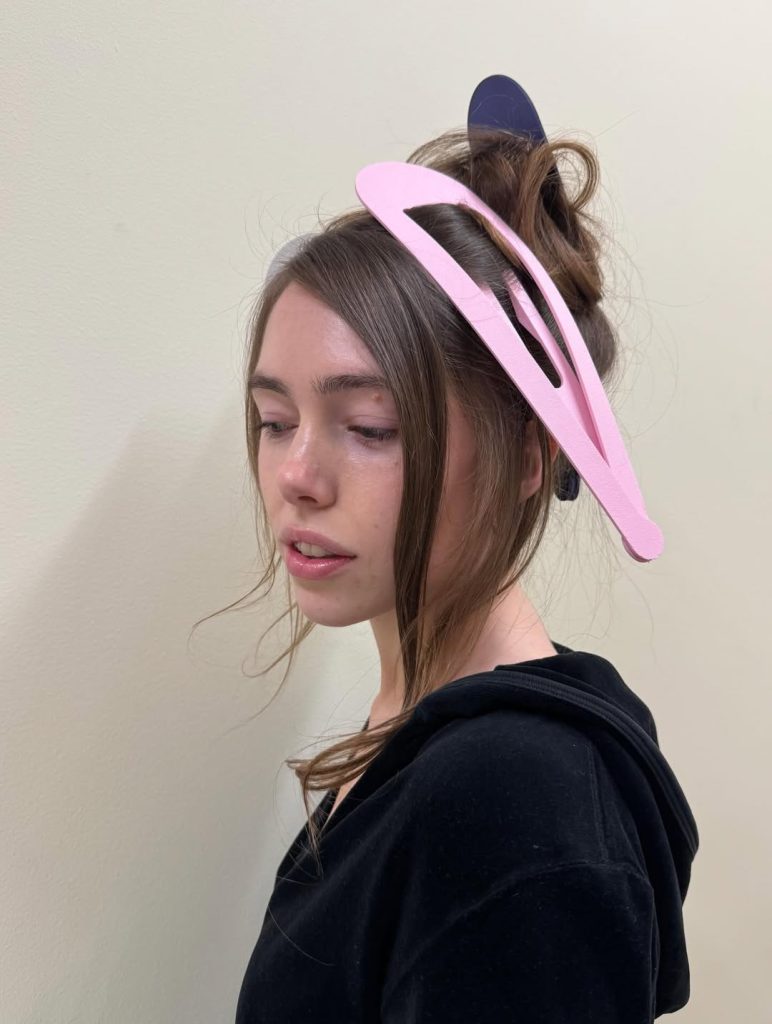
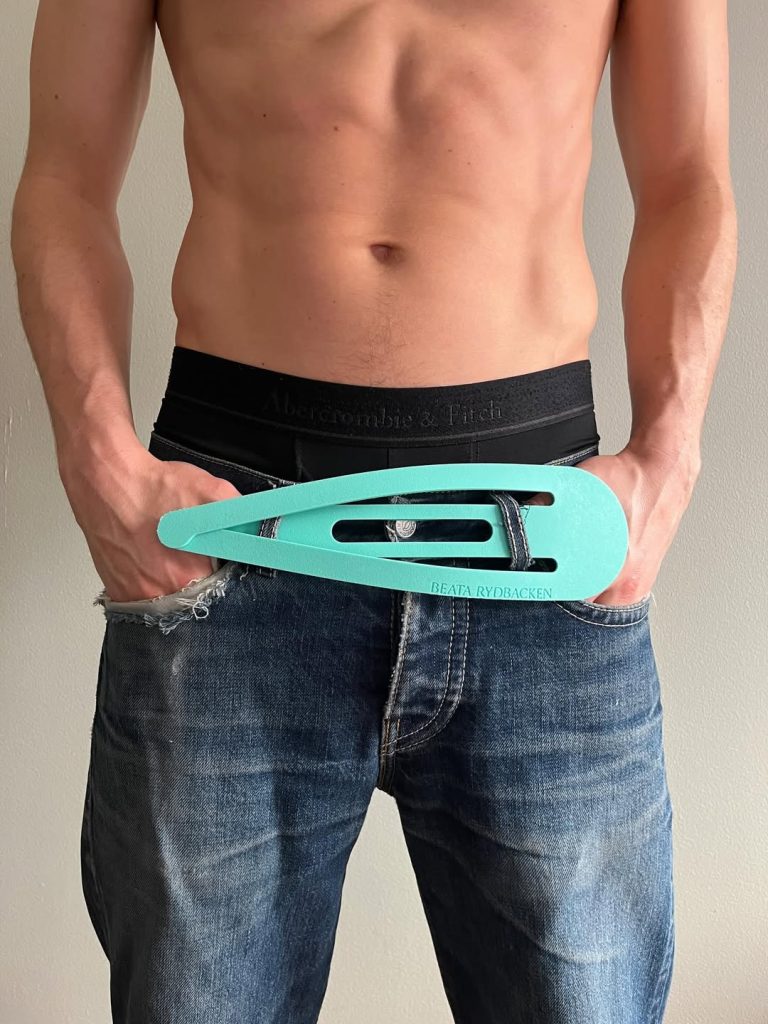
Like Westman, Rydbacken has a sharp sense of marketing and visual impact. Instead of showcasing her hair clips (available in four colours, by the way) on a mannequin head, she opts for a surprising styling choice: a pony. The visual impact is immediate and the reach instant, she has already racked up tens of thousands of likes on Instagram. A viral accessory that’s easy to imagine popping up in fashion editorials, clipped onto it-girls’ bags, or crowning the most outlandish hairstyles.
Ida Immendorff’s couture debut
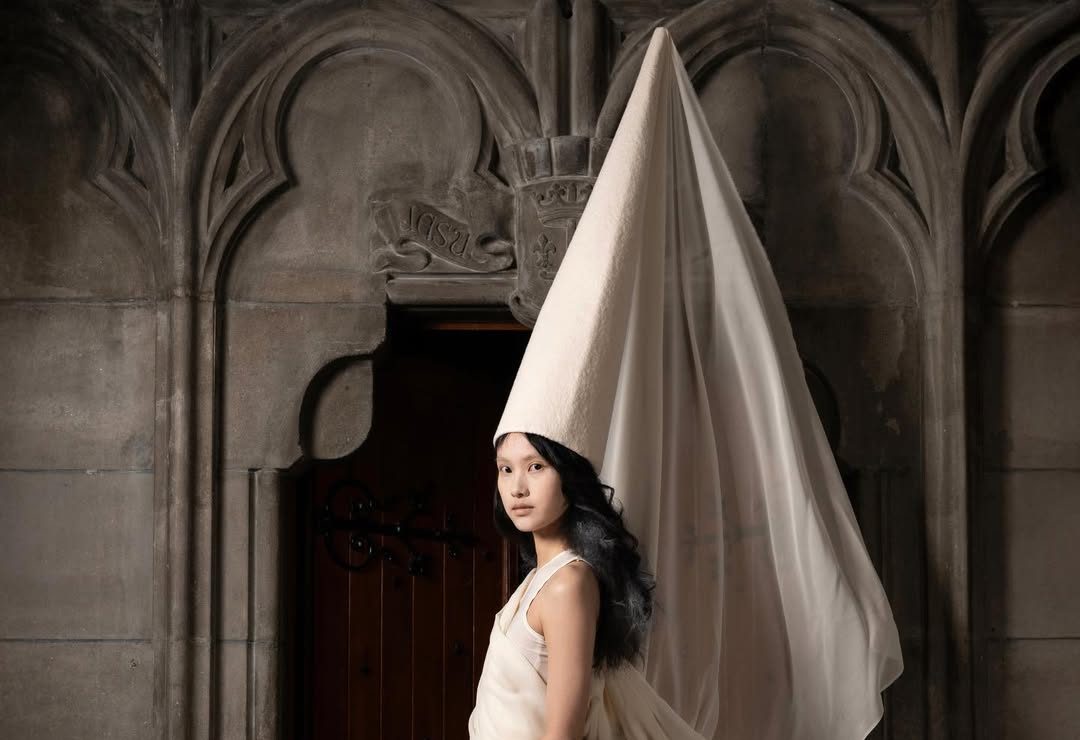
Ida Immendorff, a designer and costume maker and daughter of artists Oda Jaune and Jörg Immendorff unveiled her very first couture collection, Hi, Way to Heaven? in a deeply poetic mise-en-scène. The exclusively white fabrics evoke the sheets traditionally used to cover works of art. This radical chromatic choice lends the collection an almost spectral sense of unity.
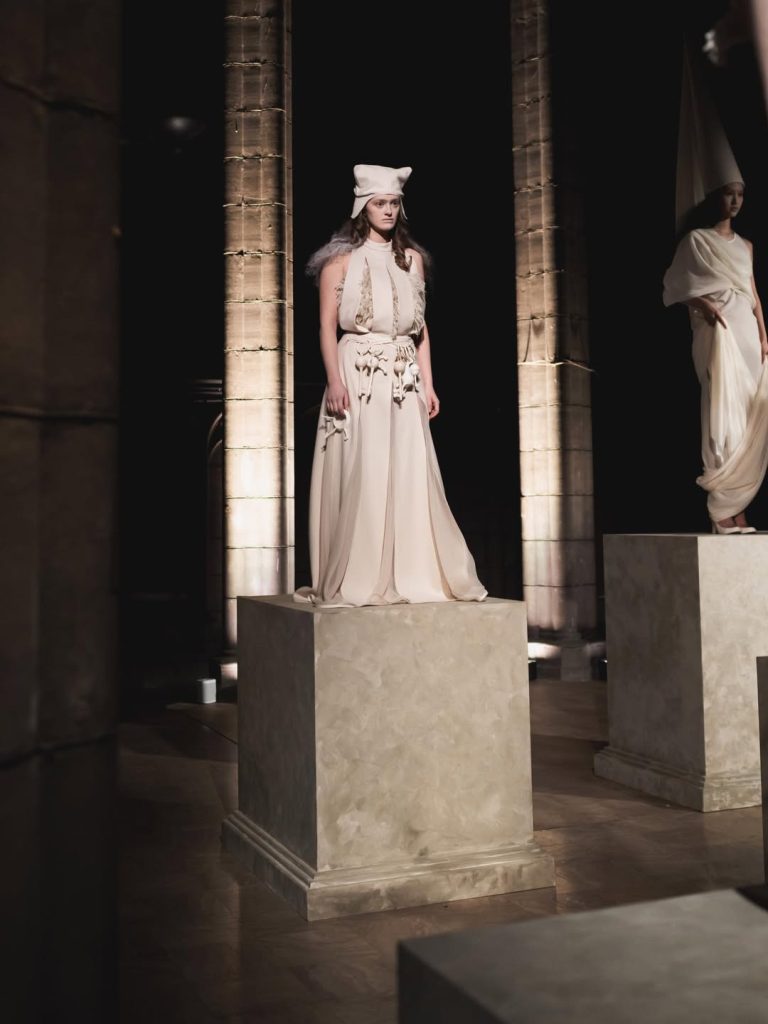
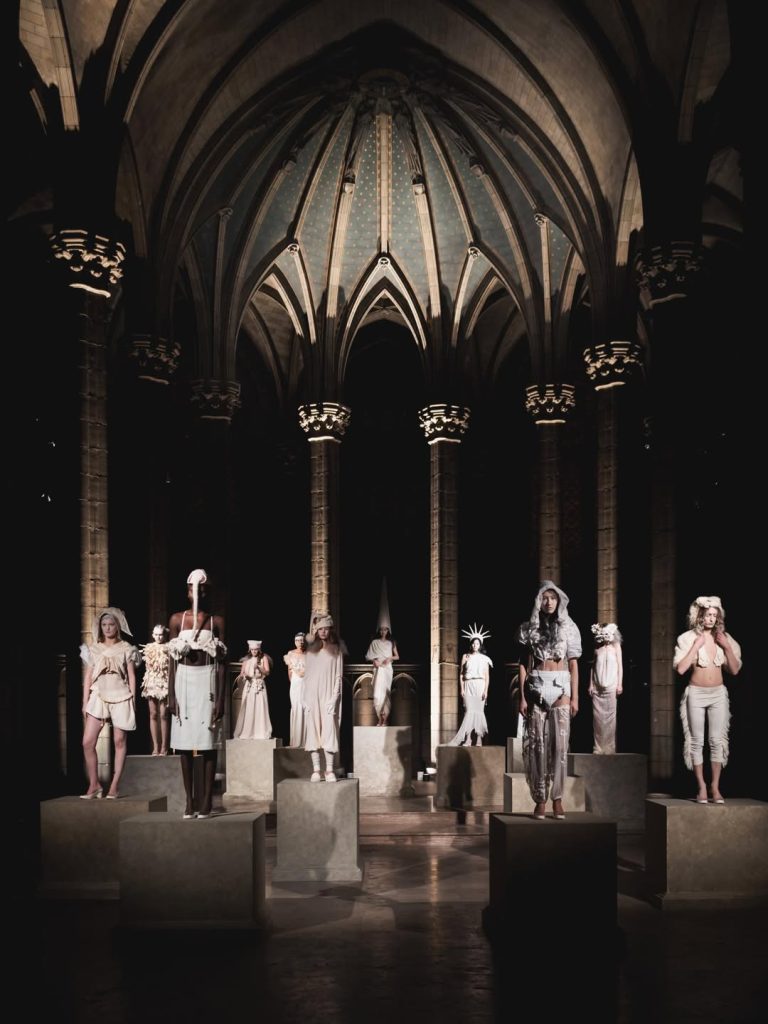
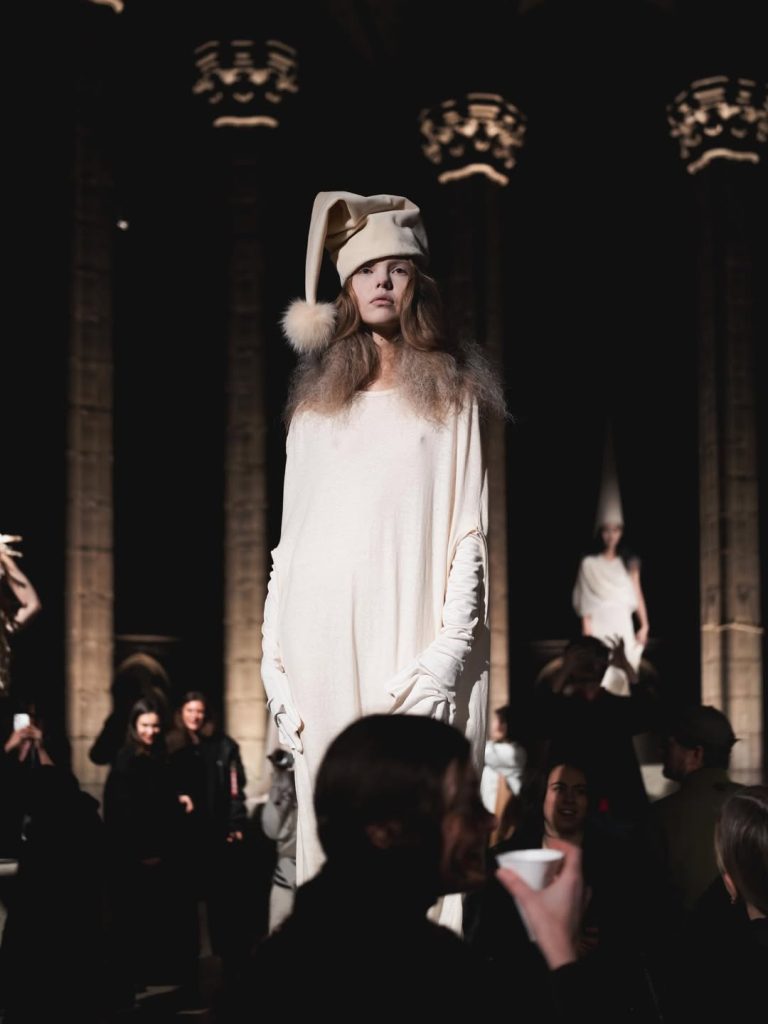
The silhouettes, dressed entirely in white, resemble creatures from another world. Delicate lace, masks, horns, hoods, and pointed hats come together to form a dreamlike universe. While the monochrome palette might suggest uniformity, each look stands apart through its construction and symbolism, revealing fragments of different stories.
With this first offering, Ida Immendorff asserts a singular vision, where fashion becomes an almost ritualistic language.
Colored hair and offbeat hairstyles on the runway
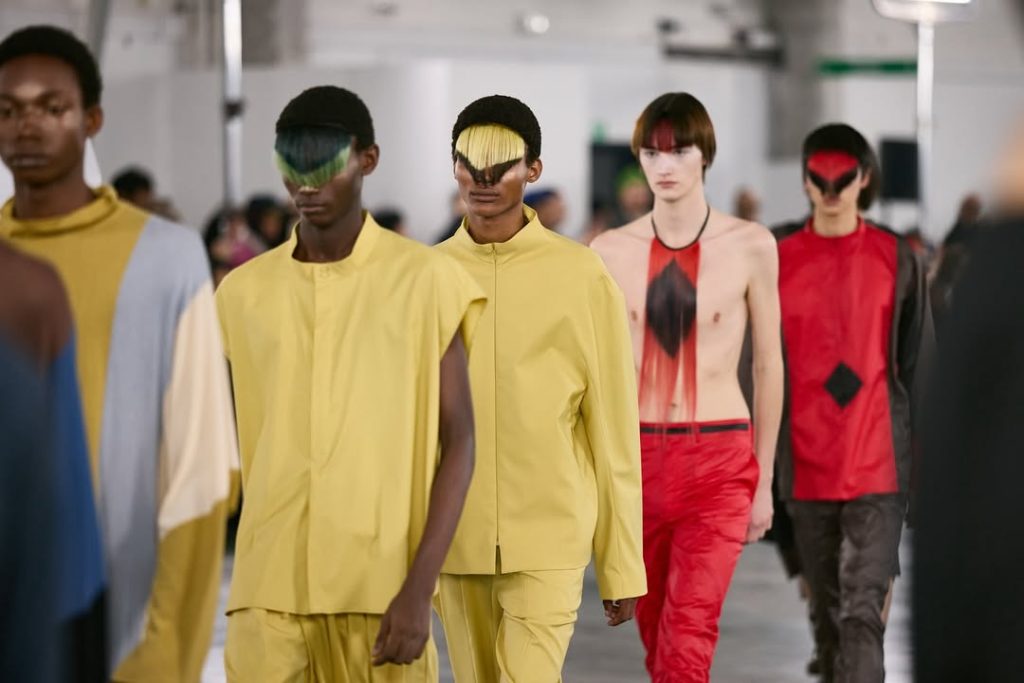
This season, hair proves to be far from a mere accessory within collections. Deliberately slicked-down hair, sculpted volumes styled into poufs reminiscent of Marie Antoinette, colored strands, and uneven lengths all take center stage. The glam team encompassing both makeup and hair, plays a key role in storytelling, particularly at Comme des Garçons Homme Plus, Yohji Yamamoto, and Charles Jeffrey LOVERBOY, where hairstyles bring the collections’ intent to their final, expressive conclusion.
At Rick Owens, Kiko Kostadinov, and LOVERBOY, vivid strands fall across the eyes, altering the perception of the face and, by extension, of the garment itself. Hair thus becomes a visual filter, blurring reference points and heightening the dramatic dimension of the looks.
A reinvented masculinity at Lazoschmidl
The Lazoschmidl duo playfully yet incisively dismantles traditional notions of masculinity. In a street-facing window, three male mannequins perform everyday domestic gestures: folding, ironing, trying on clothes. Long relegated to the background and coded as feminine, these acts are reframed as performative statements, offering a renewed and subversive vision of masculinity.
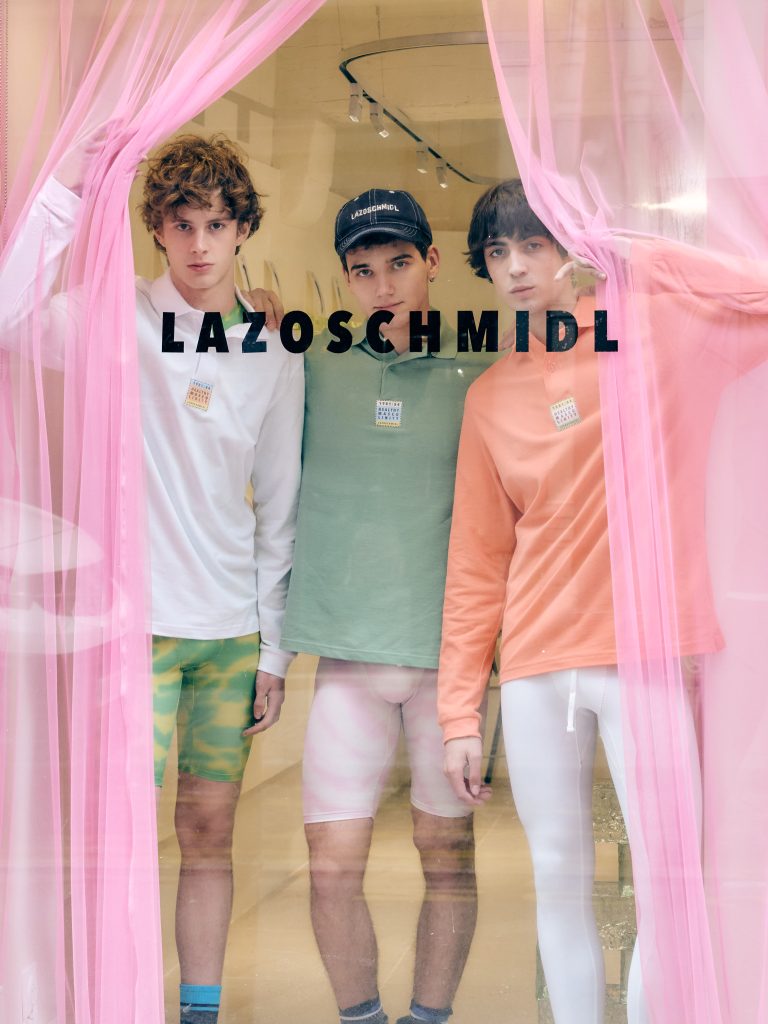
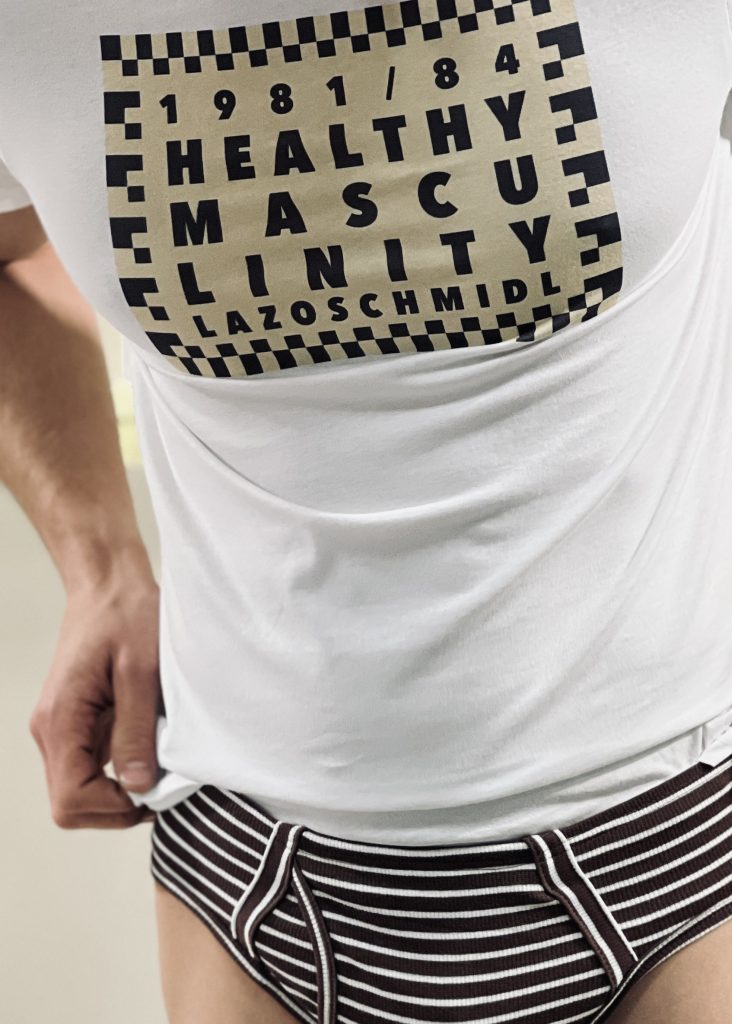
The collection carries the slogan “healthy masculinity,” printed on sweatshirts and tank tops, asserting an open, creative, and caring vision of masculinity. Publicly showing men engaged in these everyday gestures sends a powerful message especially at a time when traditional masculinism appears to be gaining ground.
Through this approach, Lazoschmidl does more than present clothes: they offer a reflection on so-called gendered roles, the representation of men within the domestic sphere, and the ways in which fashion can become a tool for critique and social transformation.
Charles Jeffrey reinvents the fashion show
In the basement of Dover Street Market, the British designer transformed his official presentation into an immersive spectacle. The band Baby Berserk performed live as models moved in rhythm with the music, while the walls and floor covered in canvases painted by the designer himself, created a fully immersive, all-encompassing scenography.
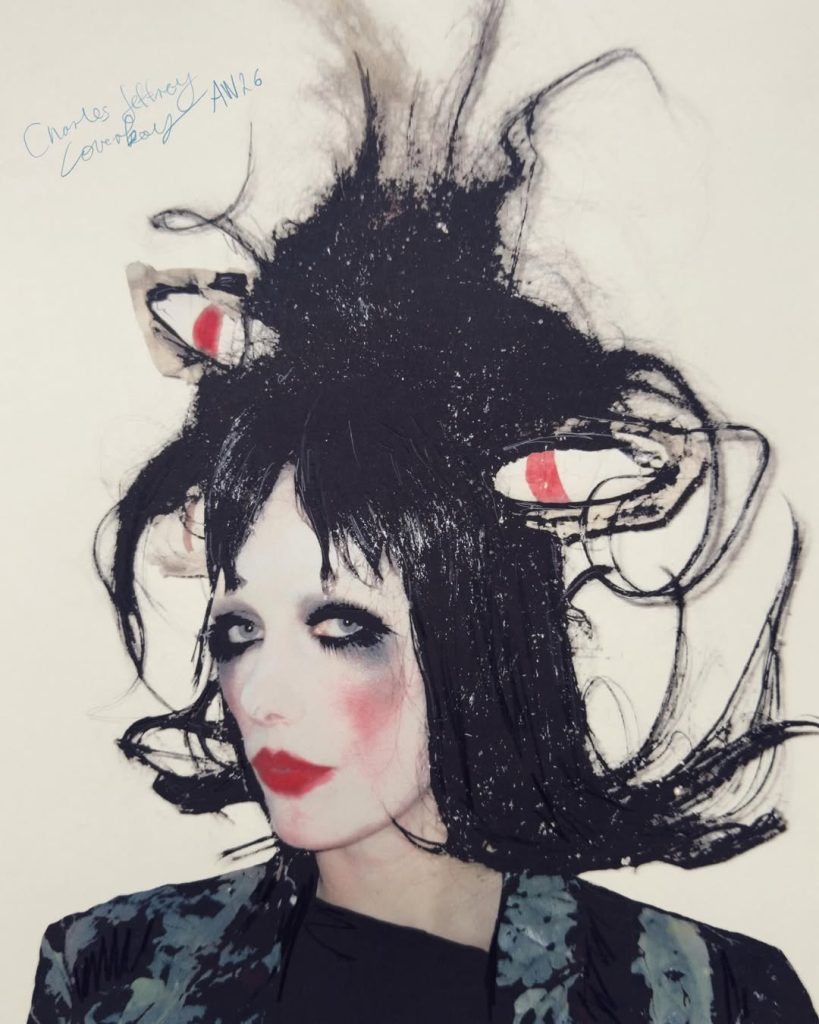
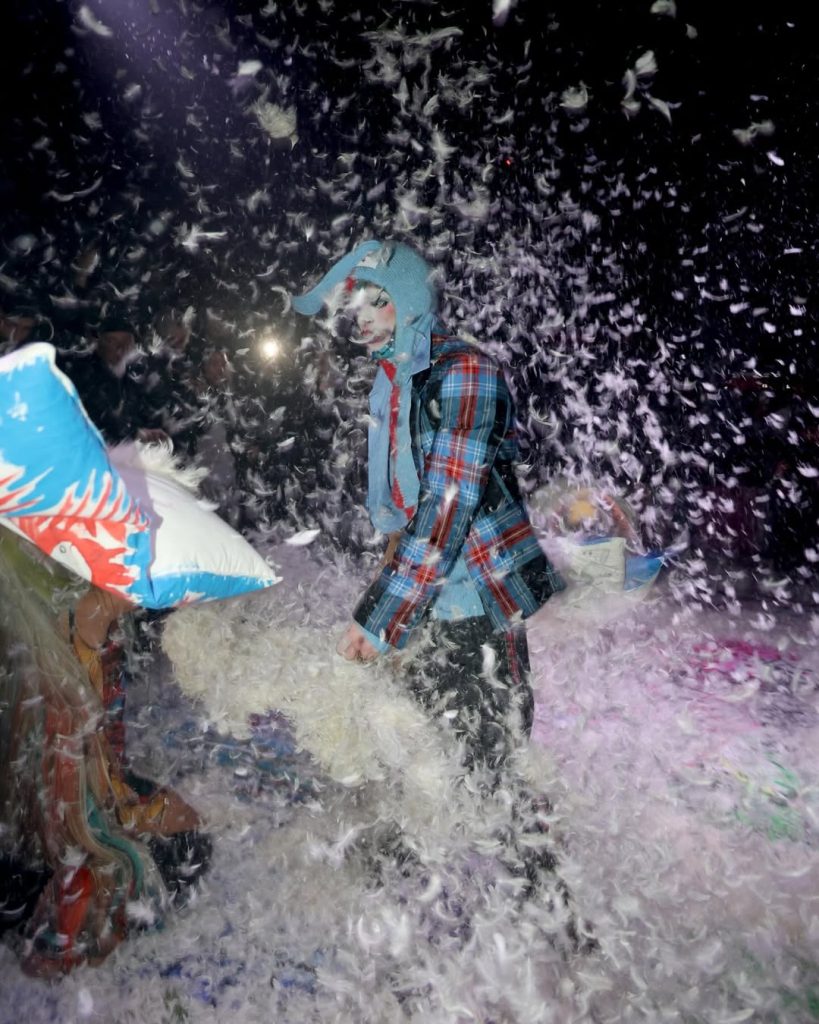
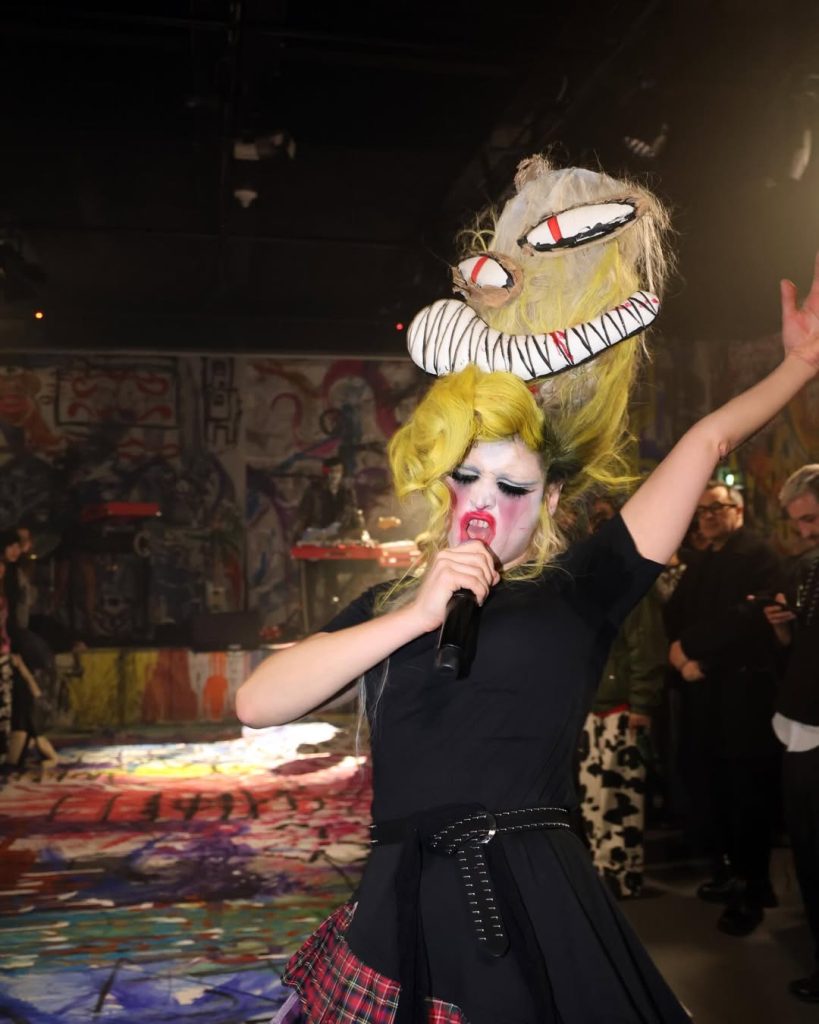
The static catwalk where guests sit impassively now seems to belong to the past. The garment lives, breathes, and interacts with both space and audience. The fashion show has become a performance, at the crossroads of concert and art installation, echoing the punk spirit claimed by Charles Jeffrey LOVERBOY.
January shows that fashion is not merely a succession of collections: it is a playground, a laboratory of ideas, a space where the bizarre and the experimental collide. Between XXL hair clips, couture performances, and reinvented masculinity, these moments prove that innovation knows neither calendar nor borders.