
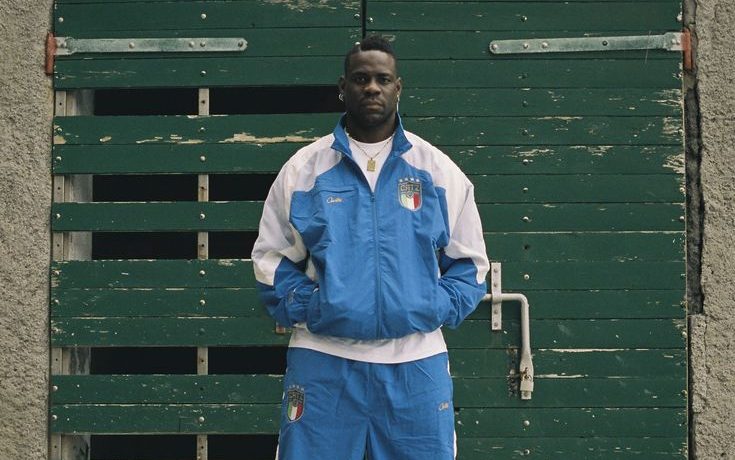
On TikTok and Instagram, Mario Balotelli is making a striking comeback. But this time, it’s neither his goals nor his provocations that are drawing attention. Ten years after his peak, it’s his style, deeply rooted in the 2000s that is captivating a new generation of fashion girls. A closer look at a revival pulled straight from football archives.
Balotelli, or Italian elegance at its finest
Having played for major clubs such as Inter Milan and Manchester City, Mario Balotelli established himself in the early 2010s as one of the most closely watched strikers of his generation. Nicknamed “Super Mario,” as much for his performances as for his unpredictable temperament, he quickly became a media personality, followed as much for his sporting achievements as for his antics.
At the time, this intense exposure fueled the tabloids and paparazzi. Today, those same images have become a true archive for a new generation obsessed with Y2K references. As early as 2015, GQ named him “Best-Dressed Man,” praising a distinctive style that combined confidence with nonchalance.
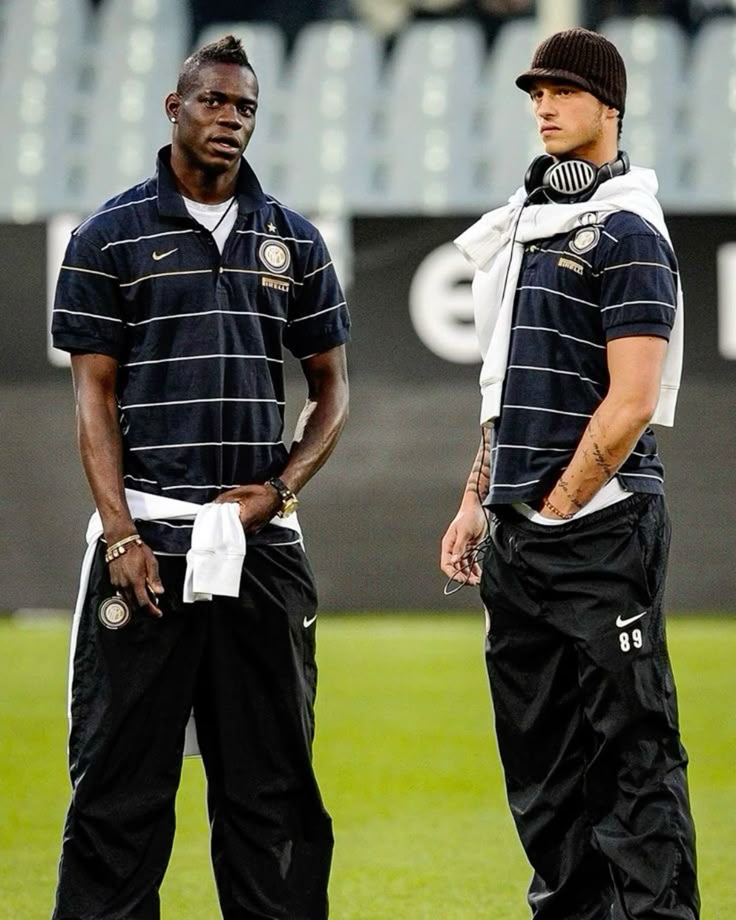
Having played for major clubs such as Inter Milan and Manchester City, Mario Balotelli established himself in the early 2010s as one of the most closely watched strikers of his generation. Nicknamed “Super Mario,” as much for his performances as for his unpredictable temperament, he quickly became a media personality, followed as much for his sporting achievements as for his antics.
At the time, this intense exposure fueled the tabloids and paparazzi. Today, those same images have become a true archive for a new generation obsessed with Y2K references. As early as 2015, GQ named him “Most Stylish Man,” praising a distinctive look that blended confidence with nonchalance.
A Y2K silhouette brought back into style
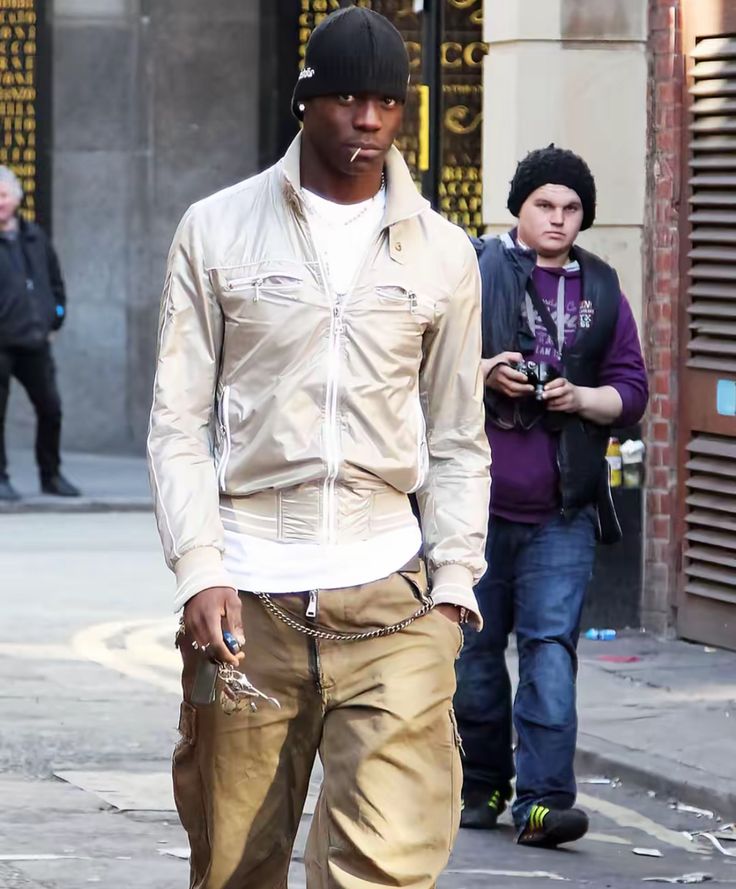
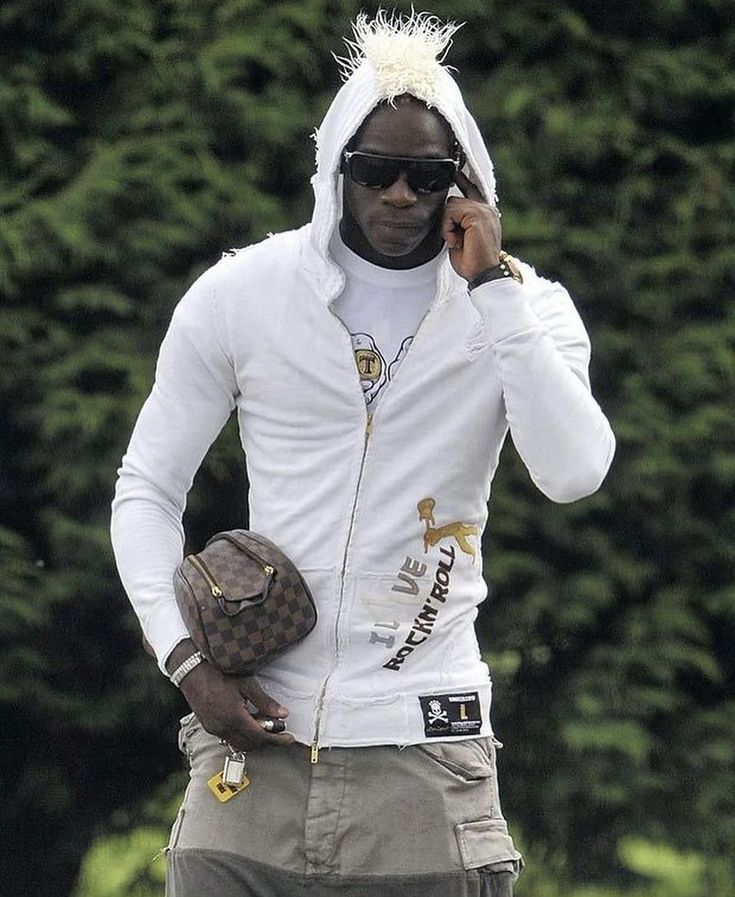
Ten years later, his wardrobe is resurfacing, this time analyzed, dissected and reinterpreted, particularly on Substack and social media. Balotelli’s stylistic grammar is precise: drop-crotch trousers, close-fitting or asymmetrical zip-up hooded vests, sometimes featuring an integrated crest. V-neck T-shirts or pieces with visible logos, a neutral color palette, and an accumulation of accessories, from beanies and caps to clutches and earrings.
At the time, brands like Kawasaki and Kaporal filled our wardrobes, while on the luxury side, Gucci and Marithé + François Girbaud enjoyed massive success. A mix of influences that perfectly reflects the hybrid aesthetic of the 2000s, blending sportswear, alternative style and logomania.
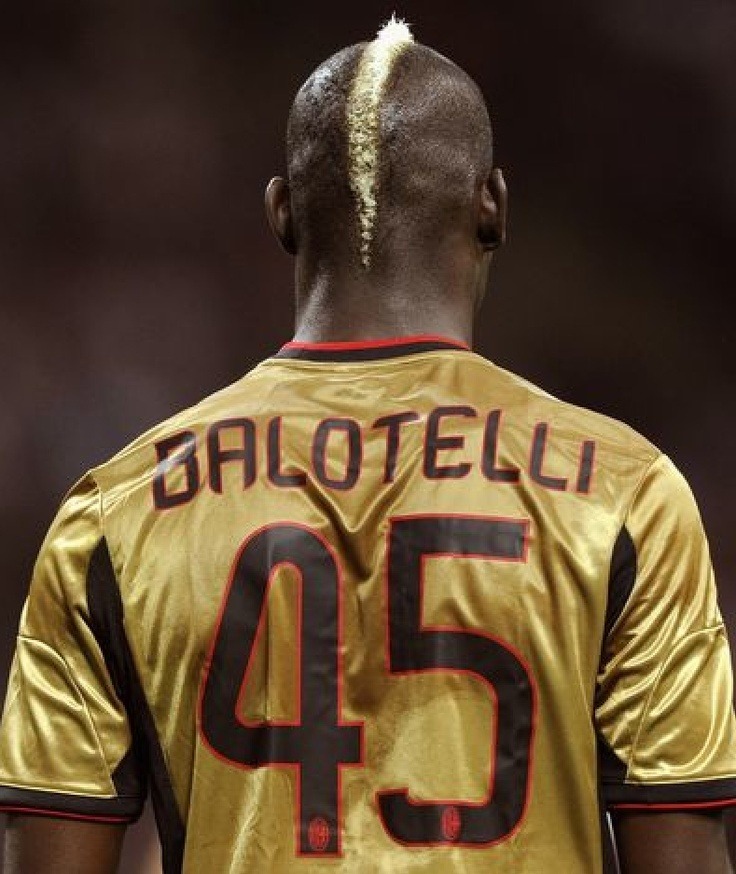
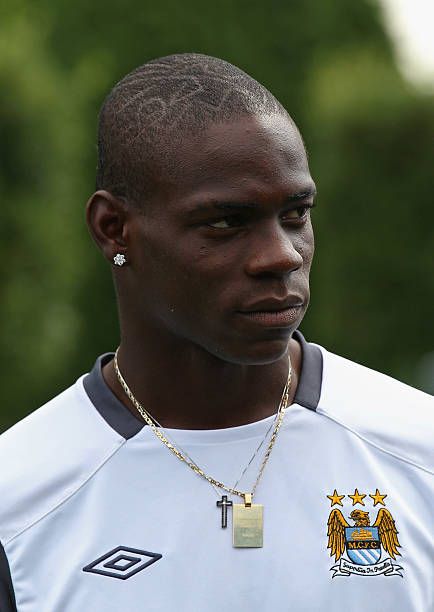
His style goes beyond clothing. His iconic mohawk worn in countless colors and variations became a signature. A way of asserting a strong individuality, even on the pitch. It projected a presence, an attitude, a way of occupying space that went beyond mere athletic performance. Where many footballers adhered to a form of implicit uniformity, Balotelli embraced an almost provocative singularity. An assertive, expressive masculinity, far removed from the more conventional norms that dominate football today.
An icon still in the making
Long perceived as a divisive figure, Mario Balotelli is now emerging as a source of inspiration. In June 2025, he walked for KidSuper in Paris during the SS26 presentation, marking his official debut at Fashion Week.
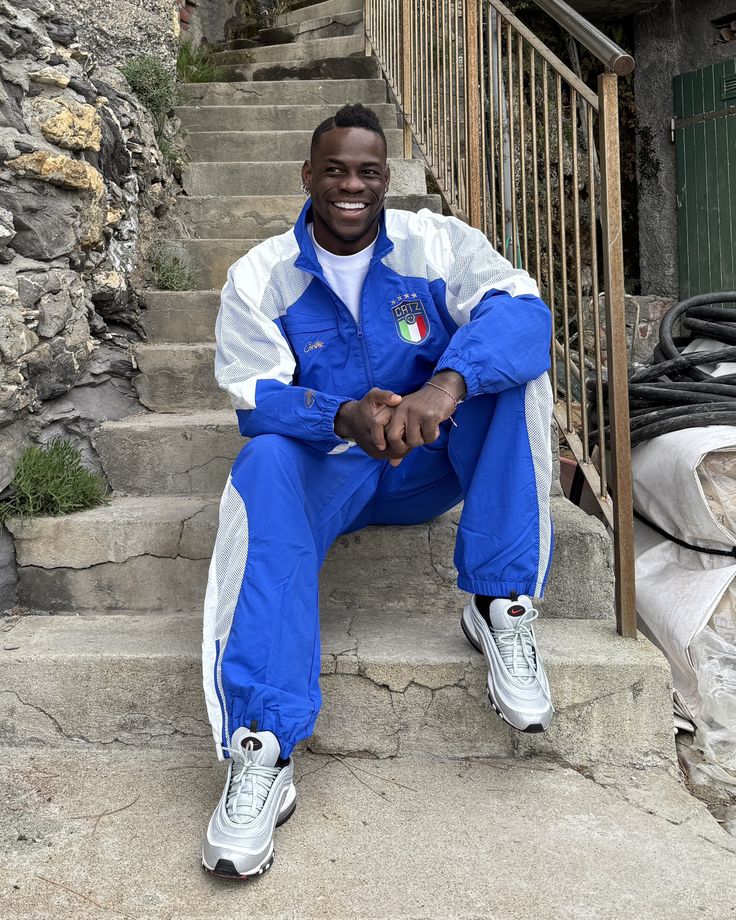
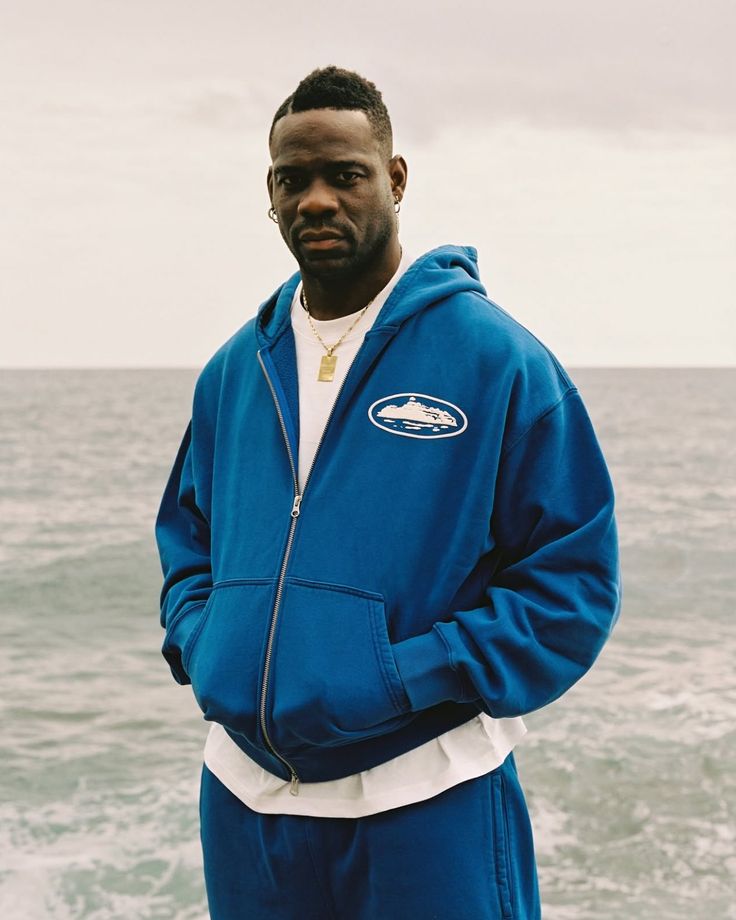
The London-based label Corteiz also pays tribute to him through a dedicated collection, even going so far as to make him an ambassador. A collaboration that revisits one of his most iconic moments: the famous “Why Always Me?”. A message revealed under his jersey after scoring a goal. A gesture that was forbidden at the time and has since become a meme in football culture.
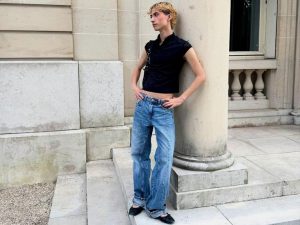
Today, his influence extends far beyond a male audience. On Instagram, content creators are reinterpreting his silhouettes and incorporating them into their mood boards. French influencer Rubi Pigeon recently dedicated a post to him, proof that his aesthetic resonates well beyond the football pitch.
Towards a reinterpretation of masculine icons
This renewed interest in Mario Balotelli is part of a broader movement re-evaluating male figure from the 2000s. Much like Cristiano Ronaldo, whose early-career style is also attracting renewed attention, sometimes reinterpreted through contemporary, even queer lenses.
In this reassessment, the boundary between masculinity and self-expression is being redrawn. The style of these athletes, once seen as excessive or ostentatious, now appears in a more avant-garde light.
Long reduced to his excesses, Balotelli is thus becoming almost, in spite of himself, an icon in the making. A silhouette drawn straight from the archives of fashion, now finding a second life in the eyes of new generations and perhaps, at last, recognition.