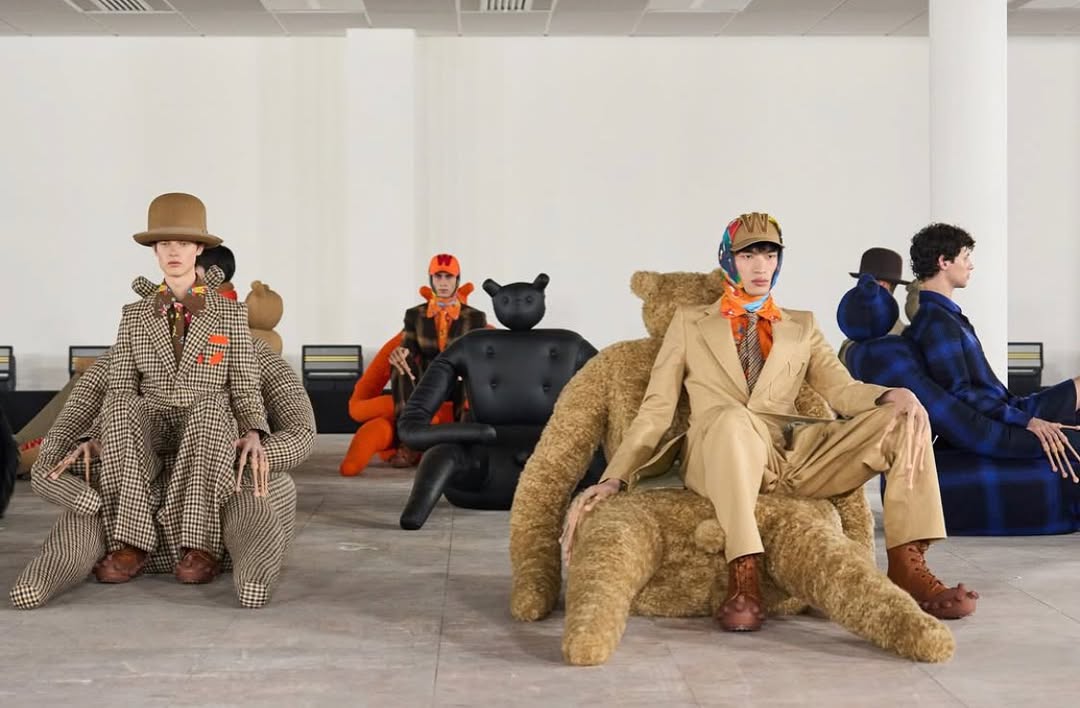


Written off in the 2010s, mocked for its shape and even its name, the bum bag has nonetheless stood the test of time. From 1980s joggers to underground raves, from rappers to the heroines of Sex and the City, it has established itself as a reference accessory. Today, under the more refined label of the “belt bag,” it has made its way onto luxury runways, been reinvented by houses such as Hermès, Lemaire and Polène, and has become proof that fashion knows how to recycle its own missteps into new trends.
From the ski slopes to the streets
Born in the United States in the 1950s, the bum bag was originally designed for skiers, worn around the waist but positioned at the back for optimal comfort. Initially created to carry essentials on the slopes, it owes its French name to the outdoor retailer “Au Vieux Campeur,” which helped popularise the term sac banane.
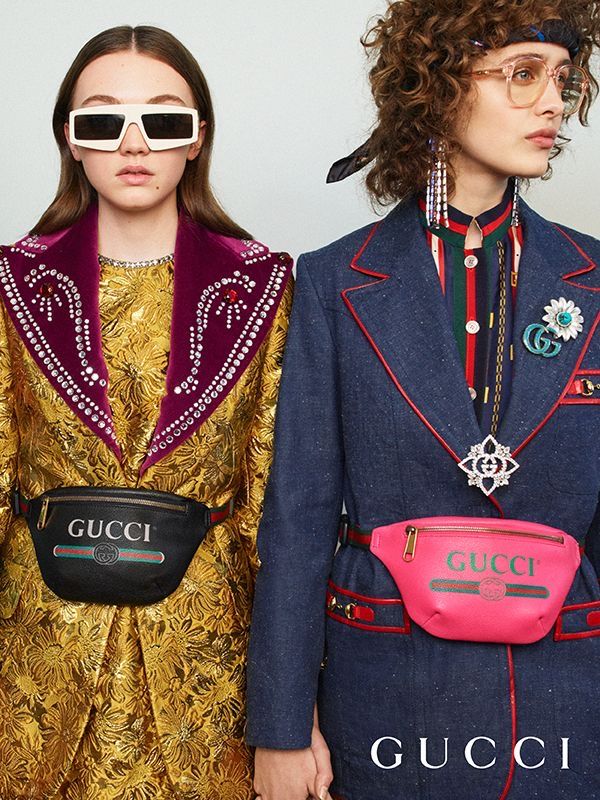
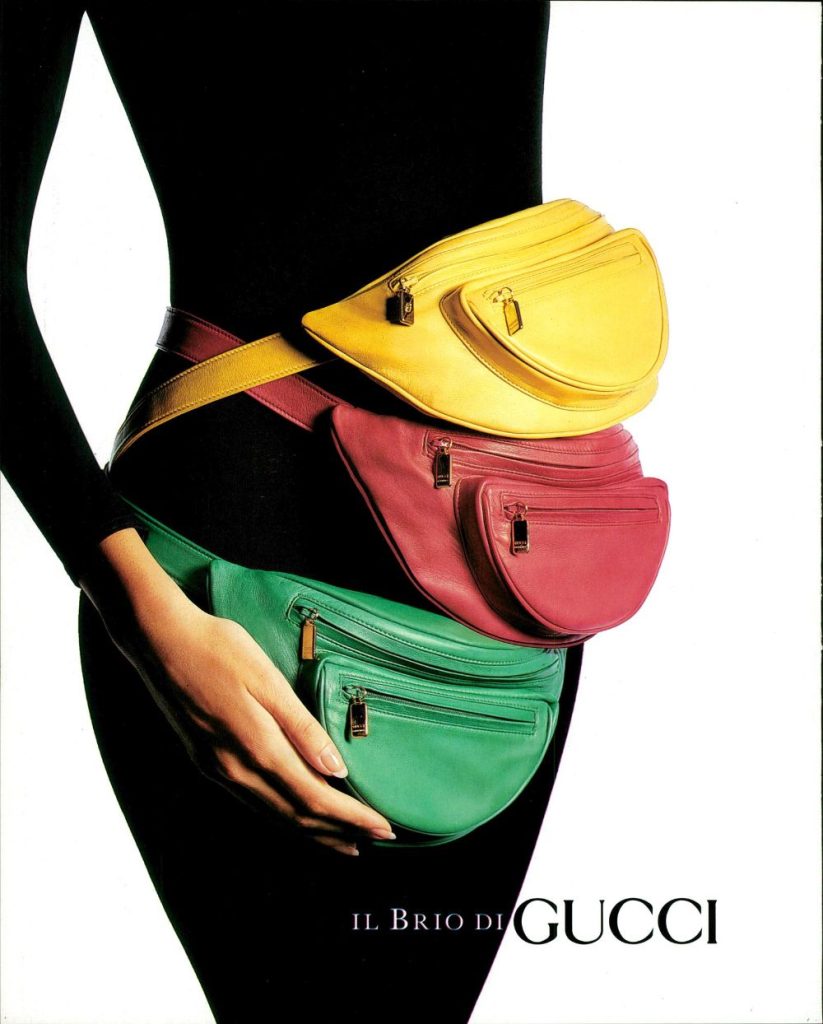
The 1980s and 1990s marked its golden age. Made from colourful nylon, it won people over above all for its practicality. Joggers, hikers and rave party enthusiasts embraced it, before the hip-hop scene turned it into a symbol, often worn alongside a baseball cap. On television, Carrie Bradshaw in Sex and the City embodied this shift towards fashion by sporting a Gucci pouch worn as a bum bag.
Originally worn around the hips, the bum bag later evolved into a crossbody version, slung across the chest. Zipped and generously sized, it is typically designed with a main compartment and a small front pocket.
When vocabulary reshapes the accessory
From the 2000s onwards, the bum bag became burdened with an awkward image. Quickly pigeonholed, it turned into a symbol of bad taste in the eyes of part of the public, a perception reinforced by its media exposure in unflattering contexts. This rejection went beyond the accessory itself, extending to the symbolic weight of its very name.

This is when a shift occurs. The bum bag does not disappear, it is rebranded. Now given an English name, the “belt bag” sheds its negative connotations without abandoning its function. A simple change in vocabulary is enough to relaunch the accessory, revealing just how powerfully, in fashion, language can reshape the perception of an object without even needing to reinvent it entirely.
When luxury goes bananas
The bum bag’s return to the runways comes in hybrid forms. At Lemaire, the crescent-shaped bag reimagines the bum bag in leather with a minimalist approach. At Versace, Dario Vitale even after a brief stint at the Italian house sought to bring the accessory back into fashion. Worn around the waist over high-waisted jeans, the bum bag completes a silhouette inspired by the 1980s, a decade currently very much in vogue among luxury houses.
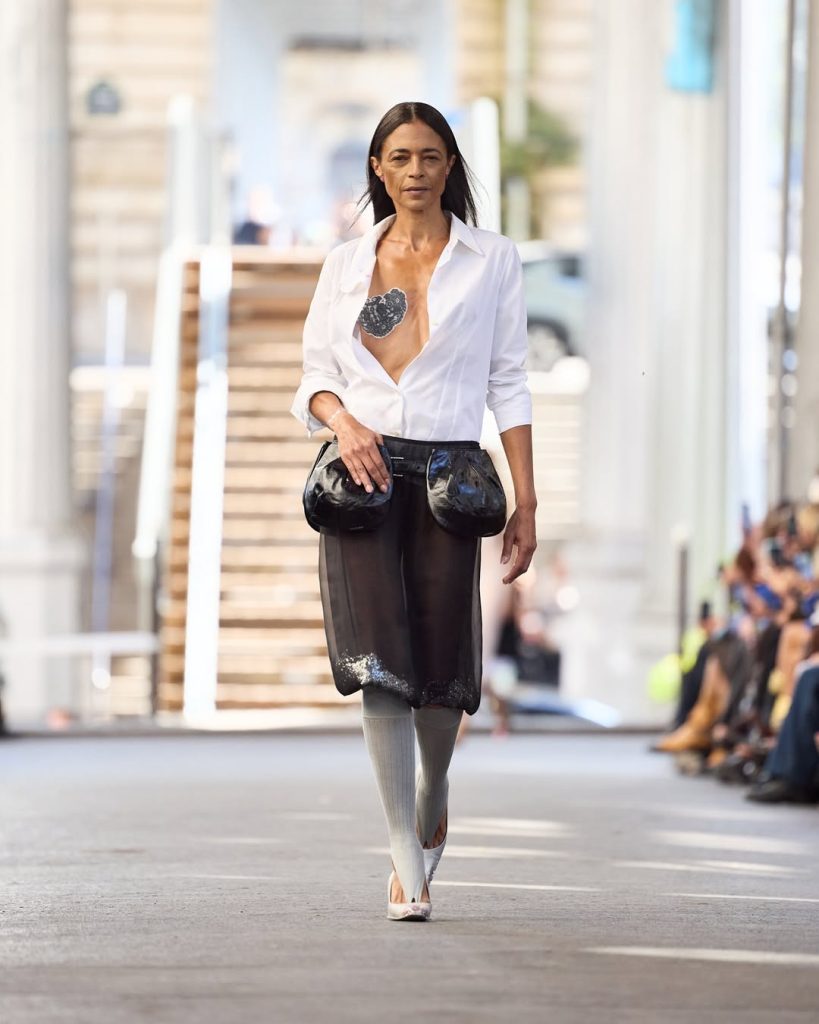

Belgian designer Julie Kegels offers a hybrid piece, somewhere between a belt and a bag, that highlights the waist while keeping the hands free. Hermès reinterprets its iconic Kelly bag in a belt-worn version, subtly reviving the bum bag’s functional spirit. Even more accessible brands such as Polène have embraced the format, confirming that the bum bag or belt bag is no longer a relic of the last century, but a truly contemporary object of desire.
Visible in both women’s and men’s collections, the accessory nonetheless enjoys particularly strong appeal among women. On social media, the belt-worn bag stands out for its ability to accentuate the hips, often paired with low-rise silhouette, whether straight skirts, Capri pants or baggy trousers. Versatile by nature, it works just as well with bohemian-inspired looks as with more streetwear-oriented outfits, further confirming its ability to move effortlessly between styles.
Whether called a bum bag, a belt bag or a waist bag, this accessory continues its metamorphosis. While its original function remains practical, it has become one of the standout pieces of recent months. Fashion, which once sidelined it, has now placed it back at center stage. For or against? The verdict is yours.