
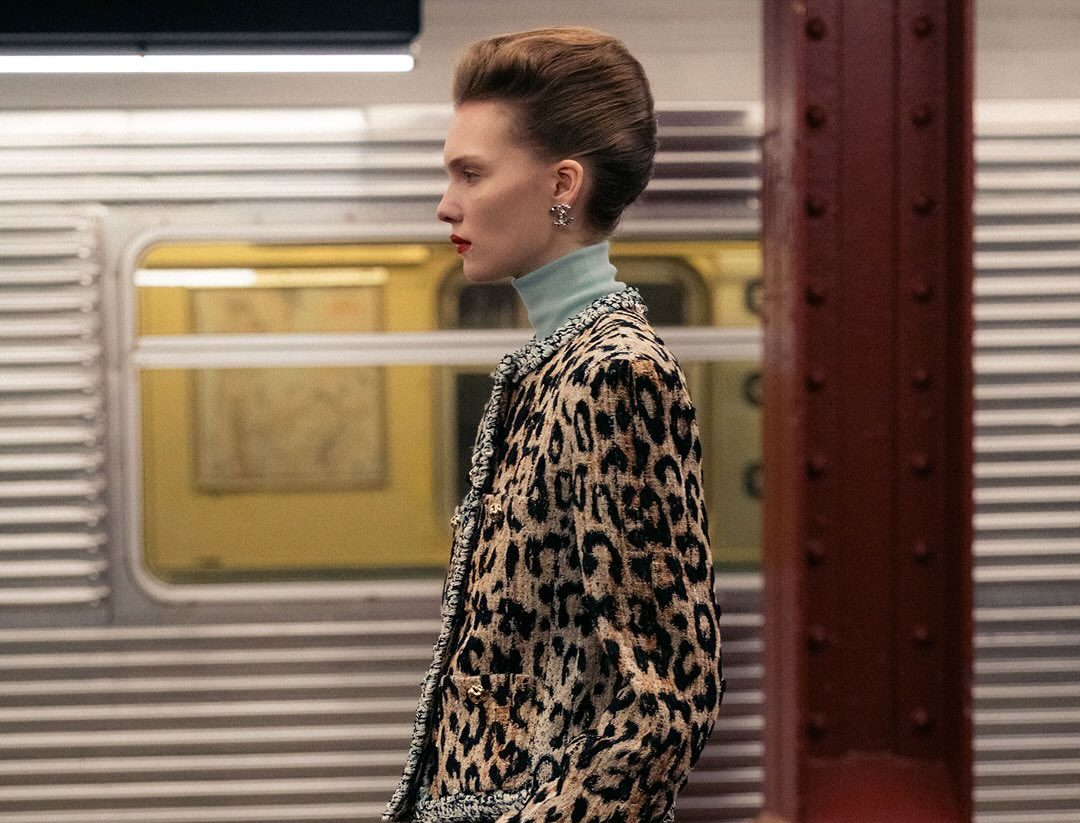
Tweed meets hip-hop, the subway embraces craftsmanship: for his first Métiers d’art collection at Chanel, Mathieu Blazy dares a perfectly mastered clash of cultures. By drawing on American pop icons, he ushers the House into a decidedly modern era.
Modernizing Chanel’s image through a strong infusion of popular culture
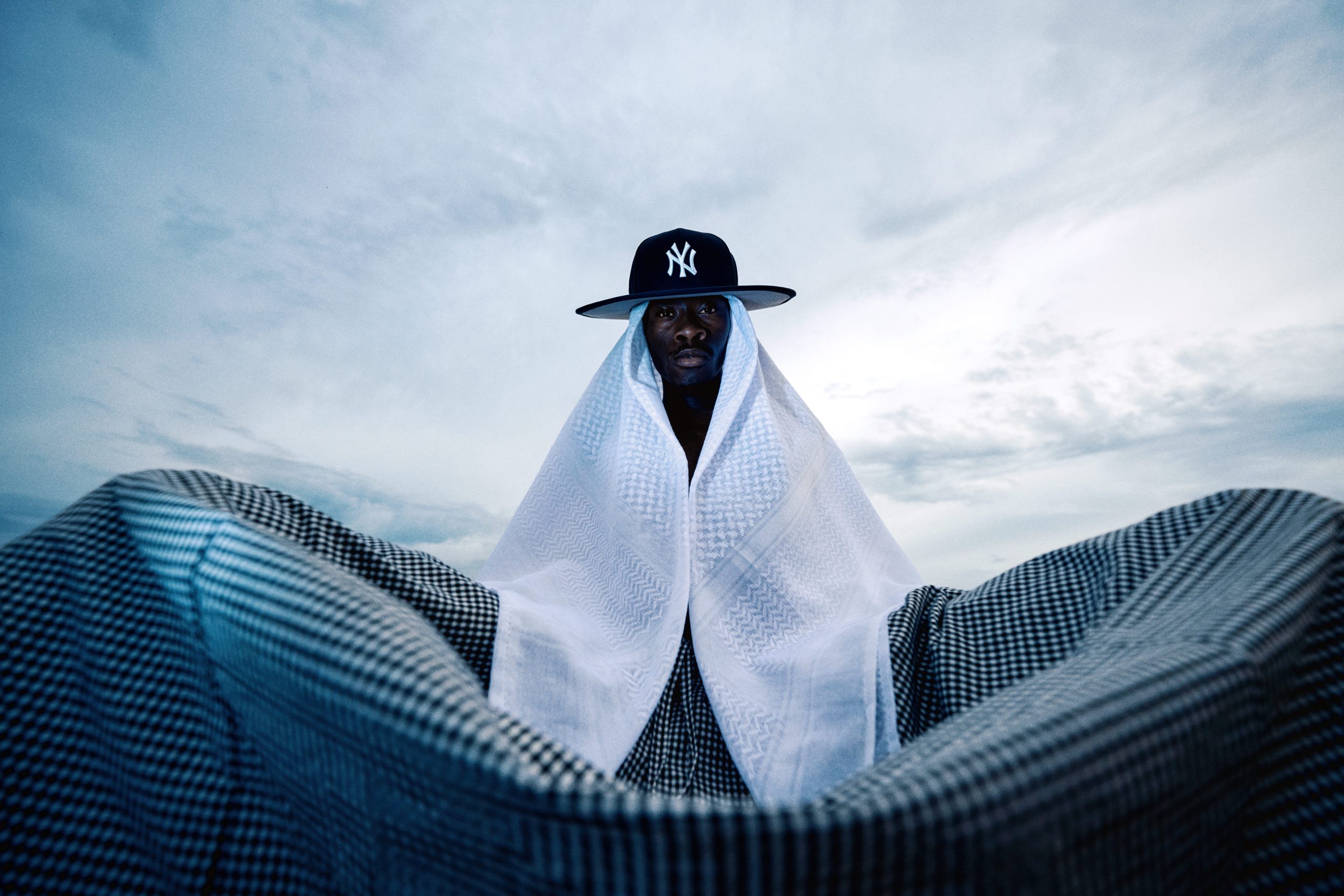
After the critical success of his first show, Mathieu Blazy continues to assert his ambition to reinvent Chanel’s image. American pop culture provides fertile ground for this renewal. By pairing the house’s iconic tweed with an “I Love NY” T-shirt, placing a slogan across the back of a leather jacket, or shortening silhouettes traditionally associated with Chanel, Blazy introduces a freer, more urban spirit into the brand’s universe. Through this cross-pollination of styles, he captures the mood of the moment and speaks to a generation for whom the boundaries between pop culture, streetwear and couture are more porous than ever. Chanel once again appears capable of reflecting the contemporary world, rather than remaining confined to its own myths.
Inclusion and diversity: a new face for Chanel
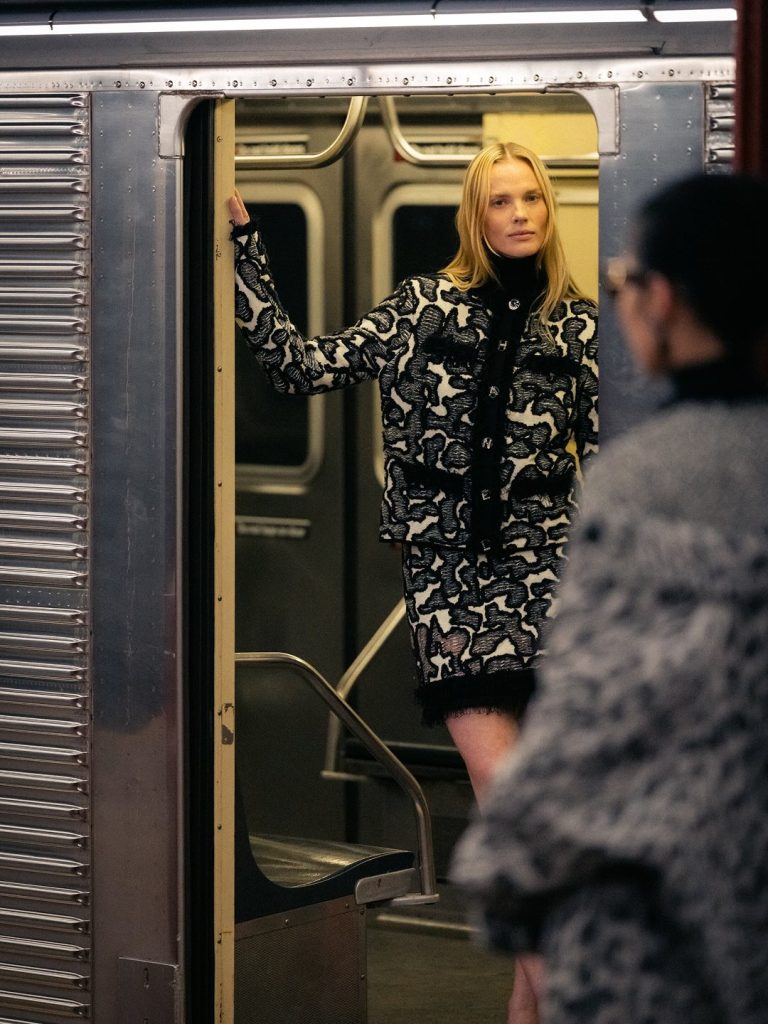
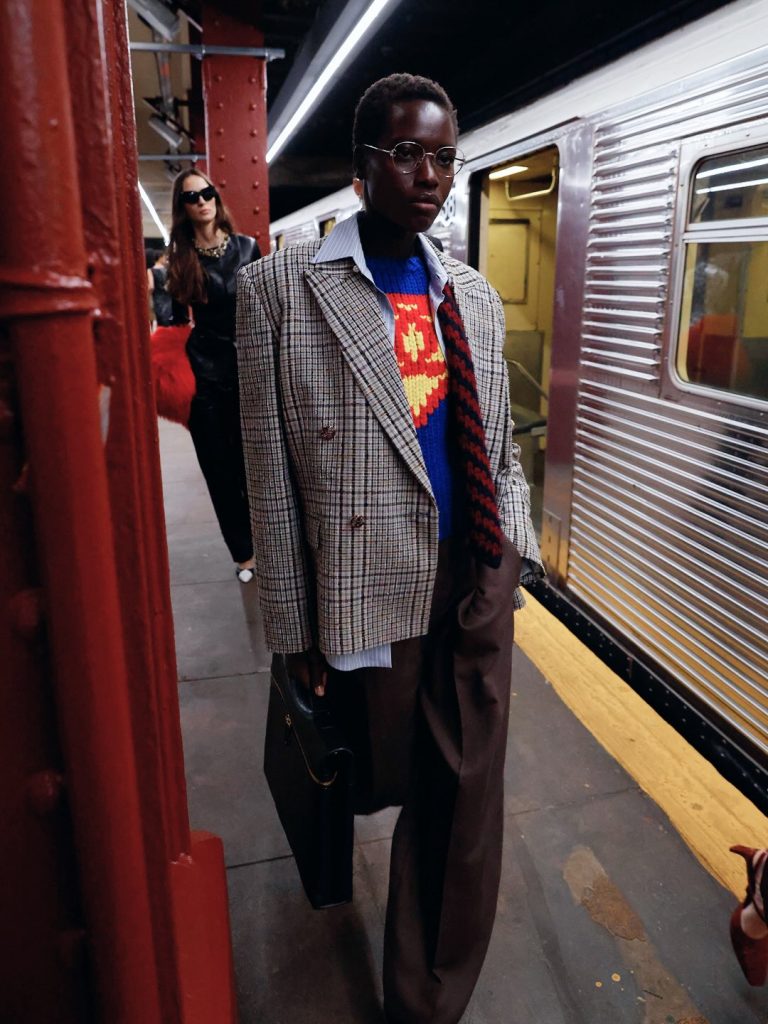
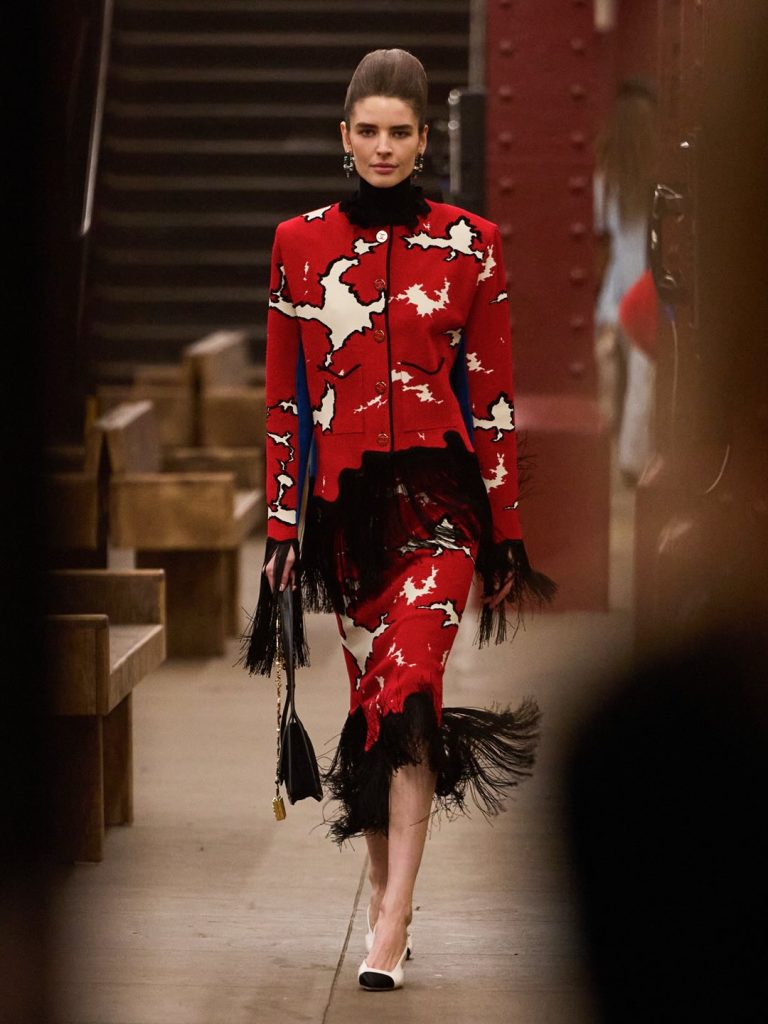
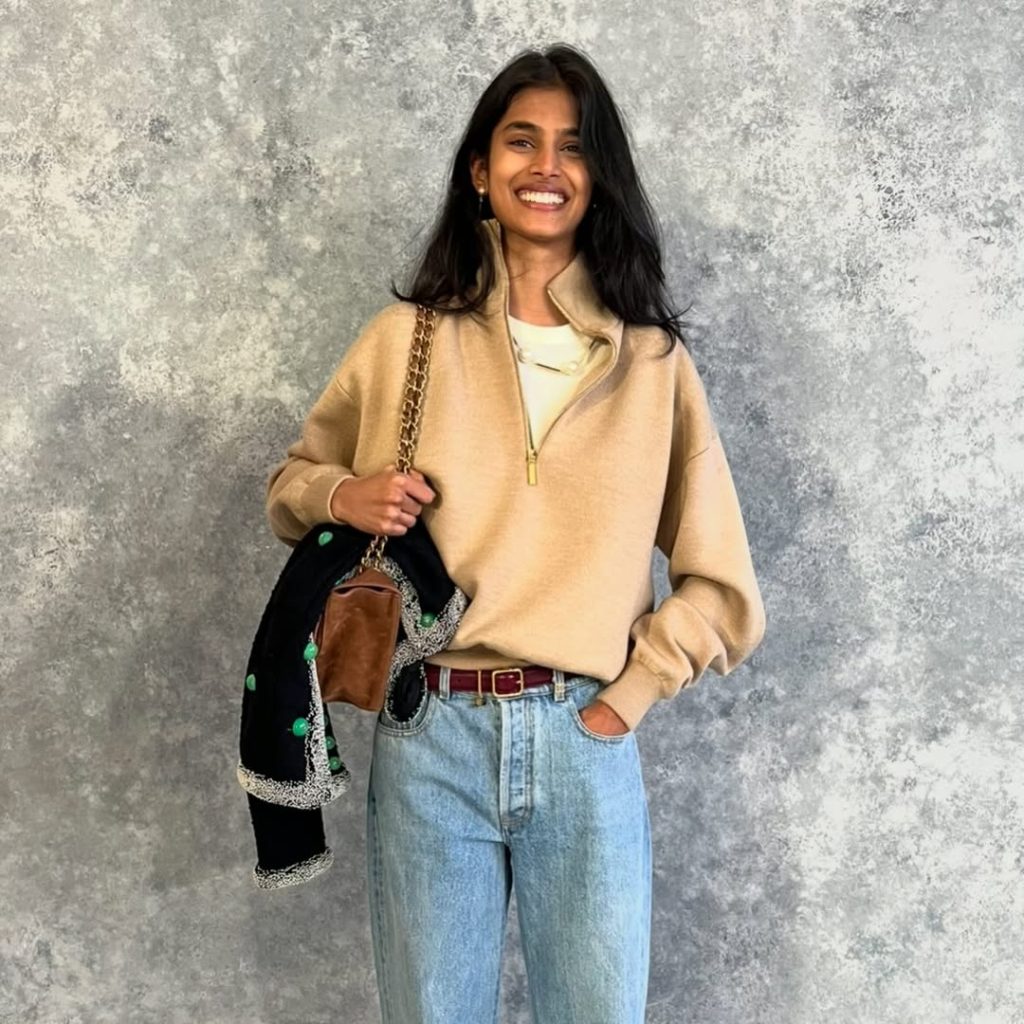
American pop culture is also a space of inclusivity, and Blazy draws on it to deliver a powerful message around representation. For the first time in Chanel’s history, an Indian model, Bhavitha Mandava, opens the show. The gesture is symbolic, historic, even and signals a clear intention to anchor the House within a more diverse cultural landscape. The designer extends this movement through the choice of Ayo Edebiri, the actress revealed by The Bear and Chanel’s new ambassador, as well as the official association of A$AP Rocky, a major figure in hip-hop, with the House. These personalities, drawn from worlds far removed from traditional Parisian luxury, embody a plural America. By weaving them into his narrative, Blazy broadens the scope of what Chanel can represent: a new chapter is about to be written… by many hands.

Chanel in the metro
Presenting the collection in the Bowery subway station is no coincidence. This transit hub, where all social classes intersect, perfectly embodies Blazy’s approach: blending worlds and breaking down the boundaries between luxury and everyday life. The choice also echoes his own journey, his years in New York, notably at Calvin Klein alongside Raf Simons. By returning to this city, the designer reactivates an imagination that is both deeply popular and profoundly personal.
The choice of the New York subway as a setting, while seemingly bold, also invites a more critical reading of Blazy’s approach. Certainly, the rawness of the location stands as a sharp contrast to the often-spectacular runways Chanel had accustomed us to. Yet this scenography raises questions: how far can luxury truly embed itself in everyday life? The corridors and platforms of the subway, turned into a mere backdrop, appear to romanticize a reality that, for many, is anything but incidental or glamorous.
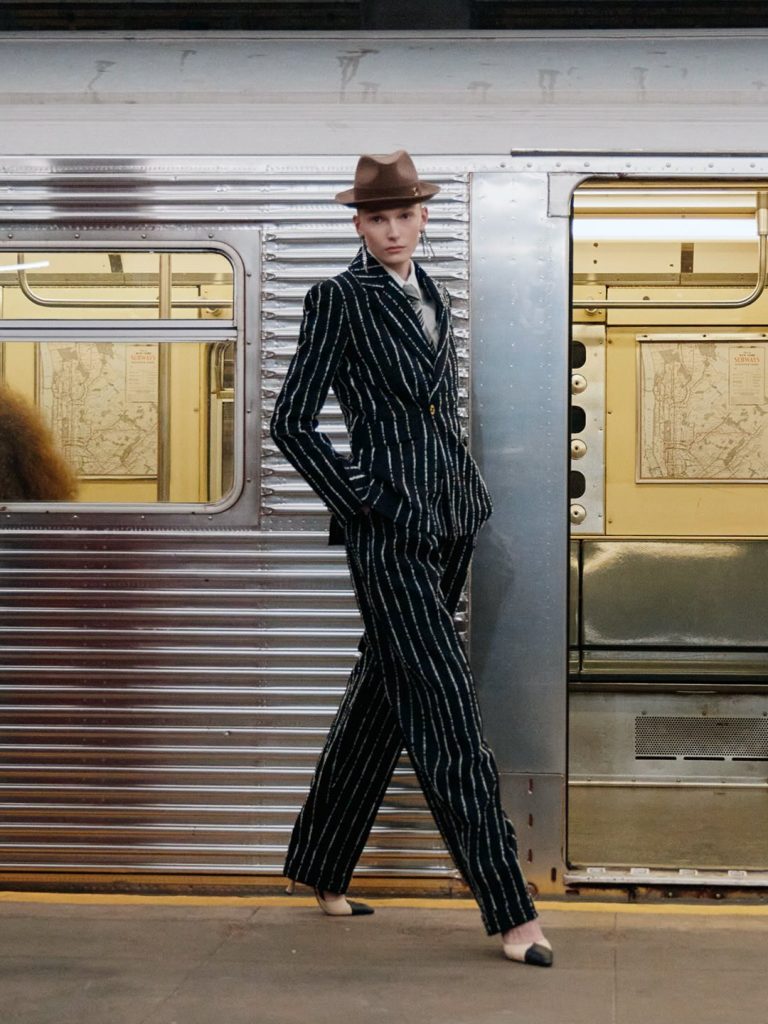
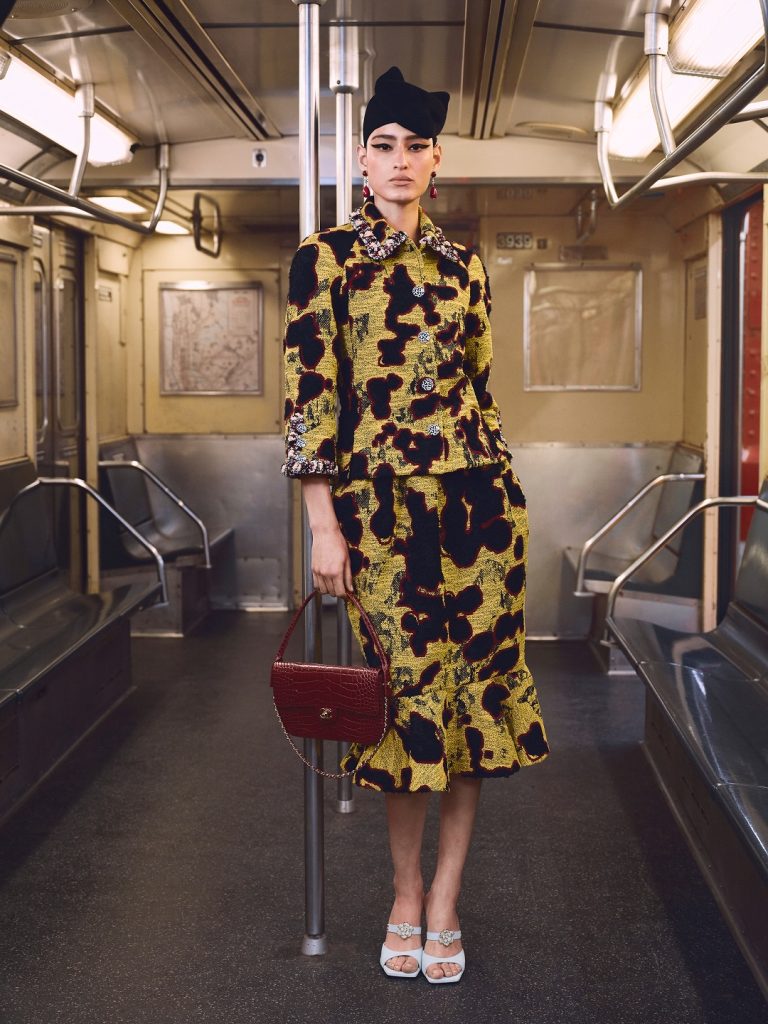
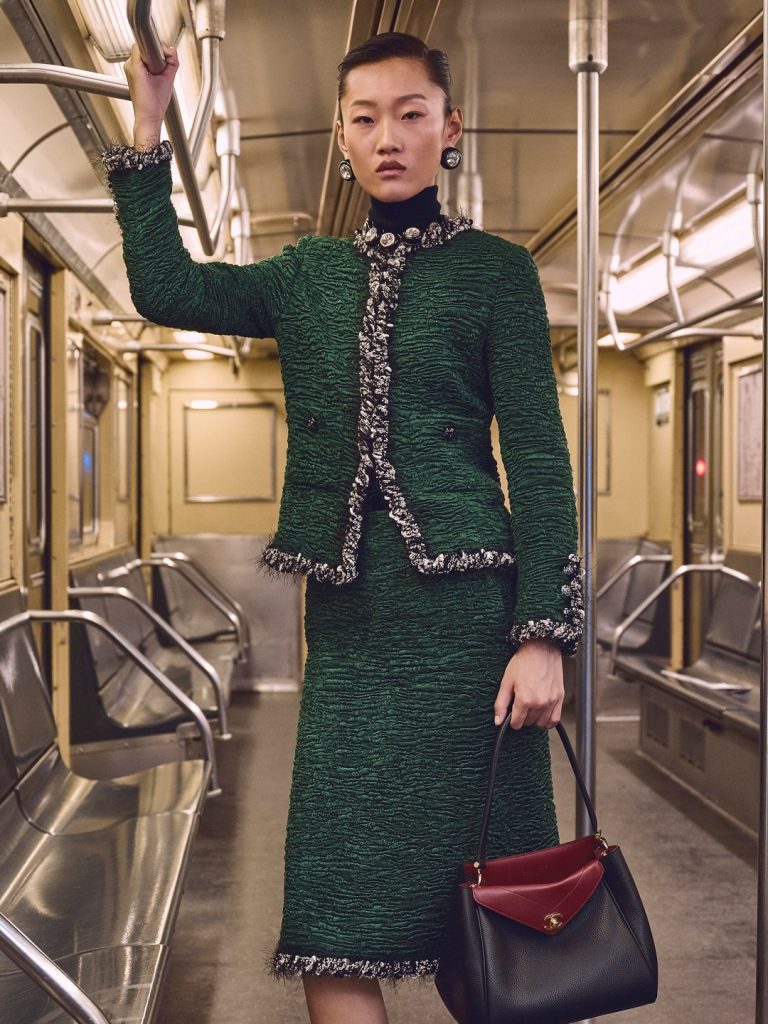
By combining the timeless codes of French luxury with the bold aesthetic of American pop culture, Mathieu Blazy redefines the Chanel woman. She appears in turn as a dynamic executive in an emerald suit, an it-girl sporting New York’s iconic T-shirt, a glamorous figure adorned with fringes inspired by the 1930s, or a more enigmatic presence, veiled behind delicate netting. The focus on accessories underscores this duality: two handbags, symbols of the many facets of a life that intertwines professional ambition with private intimacy.
By reinterpreting the codes of American pop culture, Mathieu Blazy does more than simply modernize Chanel: he challenges the House’s traditions. Pop culture, with its rejection of hierarchies and celebration of plural identities, makes it possible to show that the Chanel woman is no longer a single, fixed ideal, but a multifaceted mosaic. Yet this gesture, bold as it may be, is not without ambivalence: by blending the language of the street and popular icons with a historically elitist universe, Blazy navigates a fine line between innovation and spectacle, between genuine inclusivity and staged representation.