
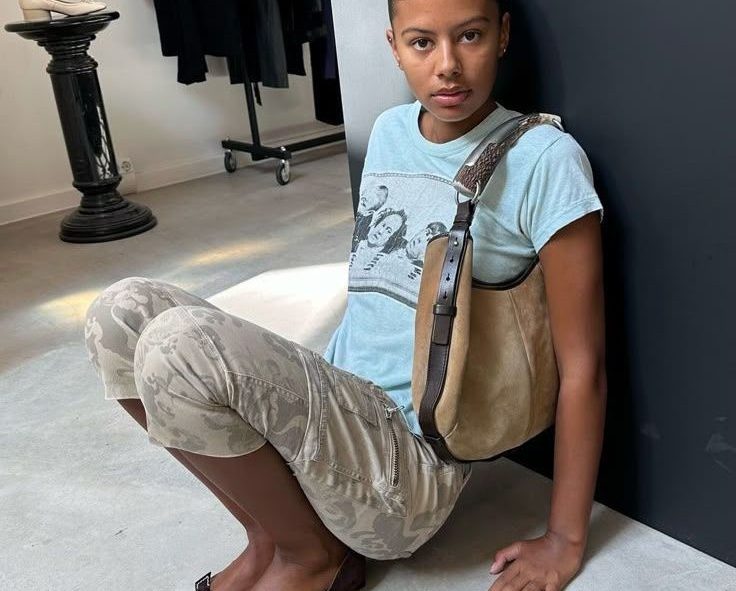
Accessories remain the economic backbone of major fashion houses. But creating an it-bag from scratch has become a real feat today. Faced with this reality, brands often prefer to delve into their archives. Balenciaga, Chloé, and Louis Vuitton have paved the way: reissues are reassuring while capitalizing on nostalgia. When a bag’s value starts rising on second-hand platforms, it signals a green light for fashion houses. Saint Laurent is no exception and, fourteen years after its launch, is bringing back the Mombasa. Anthony Vaccarello revisits its signature codes while firmly anchoring it in the present, mainly through the choice of Bella Hadid as its muse. A closer look at a comeback that was bound to happen.
2002: the birth of a bag that became an icon
Named after a city on Kenya’s southern coast, the Mombasa was born in 2002 as part of Tom Ford’s Spring–Summer collection for Yves Saint Laurent. The collection was openly inspired by East Africa, heavily punctuated with leopard prints and an imagery that is more widely debated today. The Africa–animal print shortcut, largely accepted at the time, would undoubtedly be viewed very differently now. Yet in the early 2000s, Tom Ford was universally acclaimed. His bold, sensual vision imposed a new grammar. His work at Gucci, in particular, is remembered for modernizing the Italian house. In hindsight, it is not so much the SS02 collection as a whole that has endured in collective memory, but rather the birth of a bag that went on to become iconic.
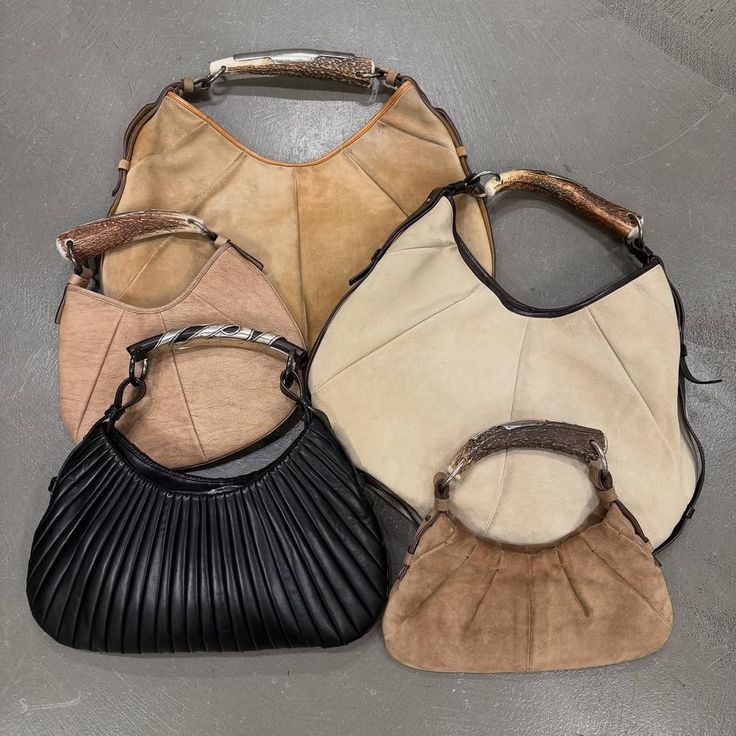
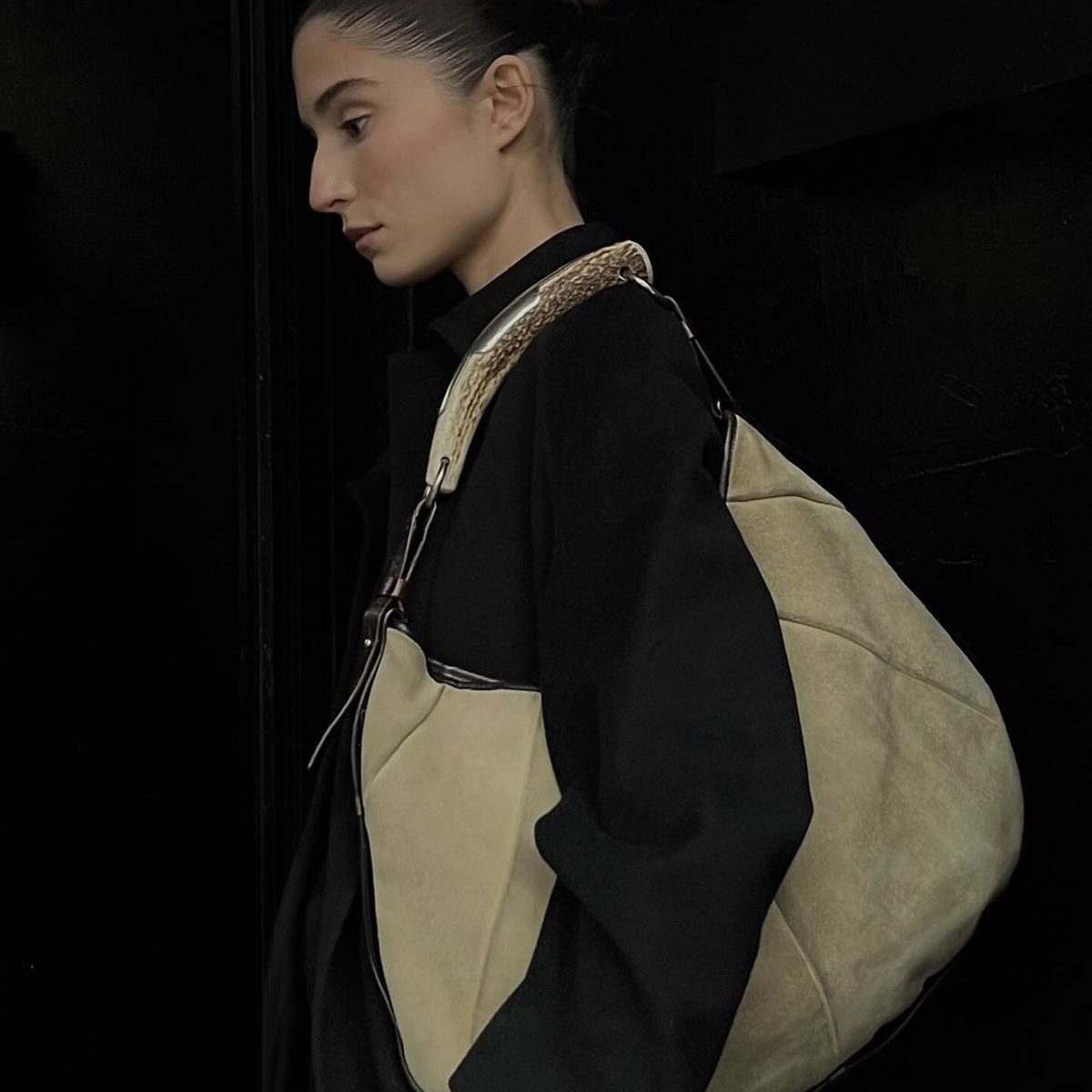
The Mombasa immediately made its mark thanks to a striking detail: its sculptural handle shaped like an elephant tusk. A signature element, instantly recognizable, that captivated the it-girls of the early 2000s and flooded red carpets and magazine pages before gradually fading from view, a casualty of the relentless cycle of trends.
From oblivion to revival: the key role of the second-hand market
The rise of the second-hand market has nevertheless changed the game. Without becoming ubiquitous again, the Mombasa has reclaimed a singular place within the vintage luxury ecosystem, whether online or in physical boutiques, such as nhỏgirl, a highly sought-after showroom in the Dutch capital. Even before the official announcement of its reissue, it could already be found from around €500, proof of a lasting interest and a latent desire. A valuation stable enough to catch the house’s attention. The reissue orchestrated by Saint Laurent will only amplify this momentum, mechanically driving prices up, including on the secondary market.
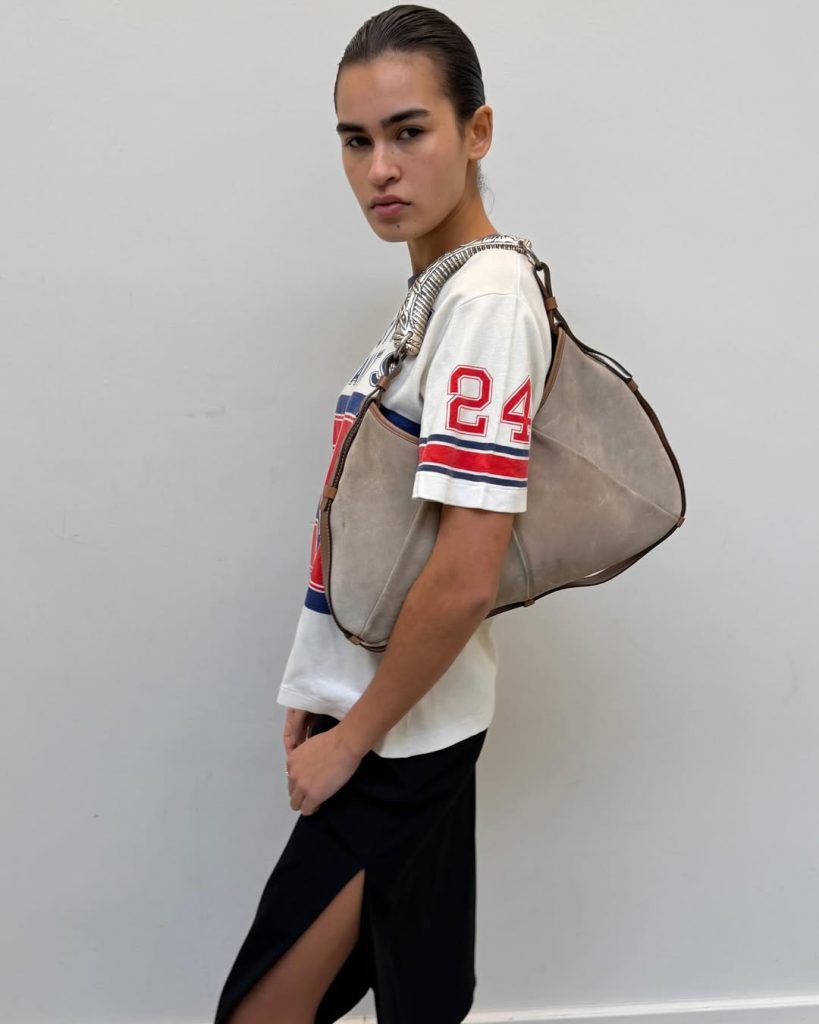
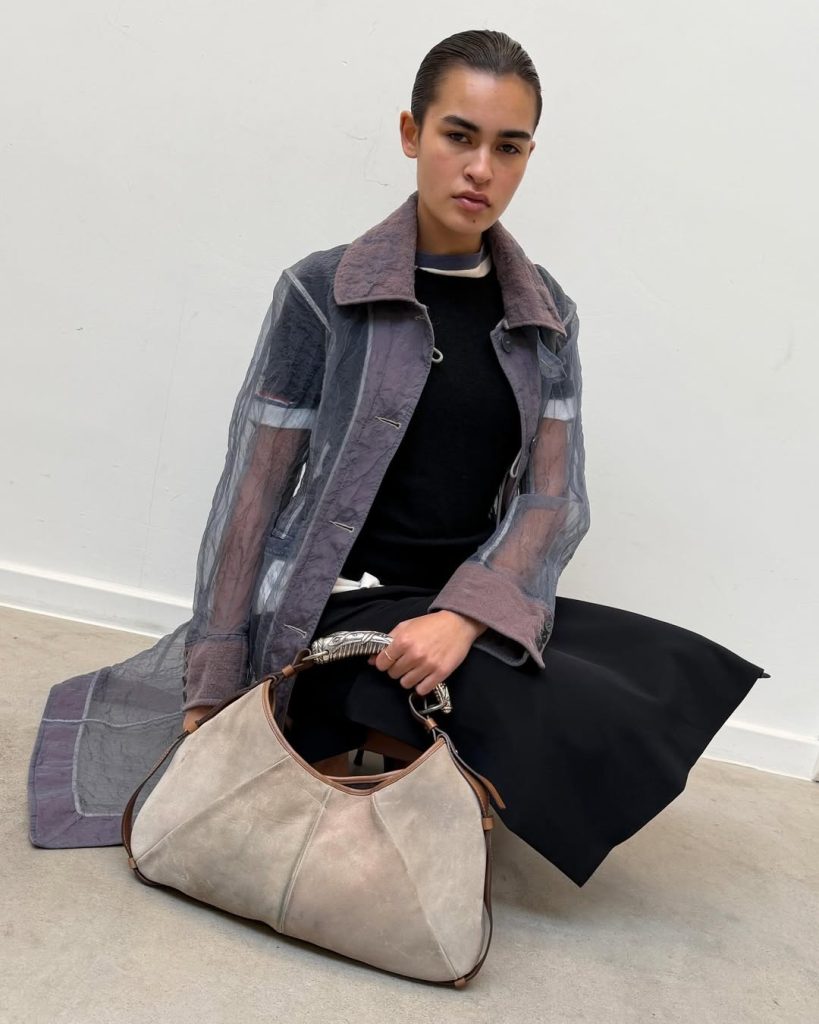
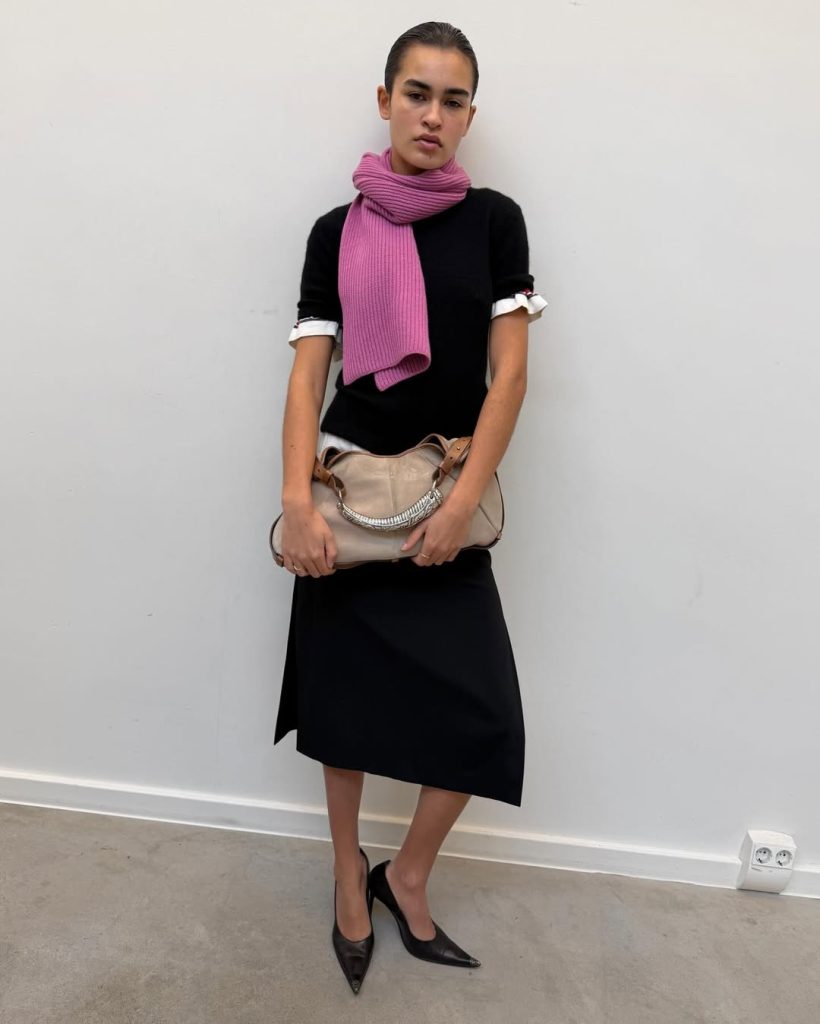
Over the years, the Mombasa has been reimagined in multiple forms: the Saint-Tropez version adorned with leather ruffles, a baguette interpretation, smooth leathers or worked skins, and vibrant color palettes. For its return, Anthony Vaccarello makes a measured choice. He first focuses on the original model: a shoulder-worn hobo bag, offered in three sizes, from handbag to tote format. One of the colorways features leather with a deliberately patinated, almost vintage appearance. An intentional nod to the piece’s history and its status as an object already imbued with memory.
Vaccarello: the archive as living material
By reissuing the Mombasa, Saint Laurent is not merely resurrecting a past success: the house is asserting a strategy that has become vital in today’s luxury landscape. At a time when absolute novelty struggles to take hold, the archive becomes a true playground. Anthony Vaccarello neither seeks to freeze the bag in nostalgia nor to transform it radically. Instead, he anchors it in a present where fashion culture feeds as much on archival imagery as on trends emerging from the second-hand market.
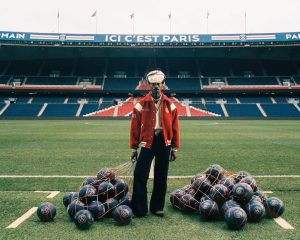
The Mombasa reissue is part of the Spring–Summer 2026 campaign, unveiled at the foot of the Eiffel Tower and inspired by the 1980s. Straddling different eras, the bag embodies a rare ability to transcend cycles: it remains above the fray of trends, a symbol of a timeless it-bag that continues to captivate generations and leave its mark on the history of Saint Laurent.