
After food trucks took the 2010s by storm, could fashion trucks be next to shake up retail? Now used as a powerful marketing tool by emerging labels and major streetwear brands, the humble utility vehicle first emerged as a flexible alternative to traditional brick-and-mortar stores.
Events as a driving force: Corteiz makes a splash in New York
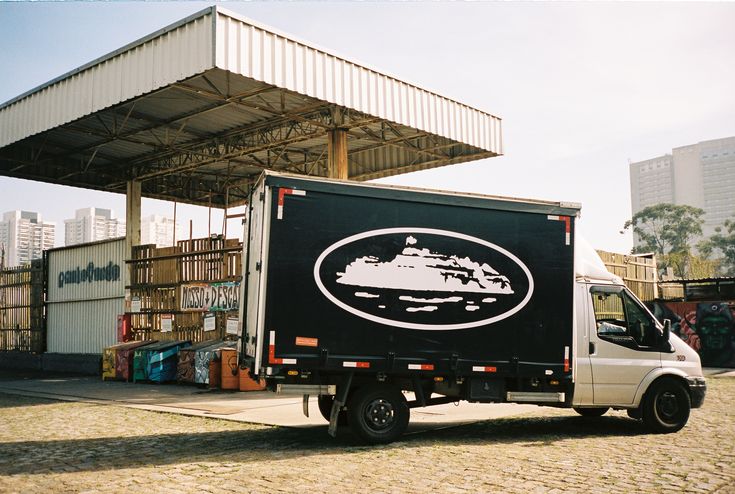
London-based brand Corteiz, founded by the enigmatic Clint, pushed the concept of mobile activations to its limits with its “Da Great Denim Exchange” operation in Brooklyn. The idea: share GPS coordinates at the last minute and invite the community to converge on the truck.
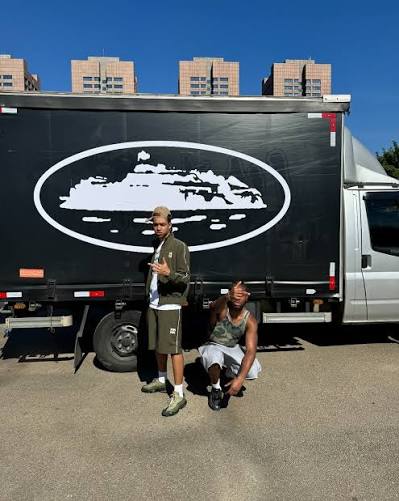
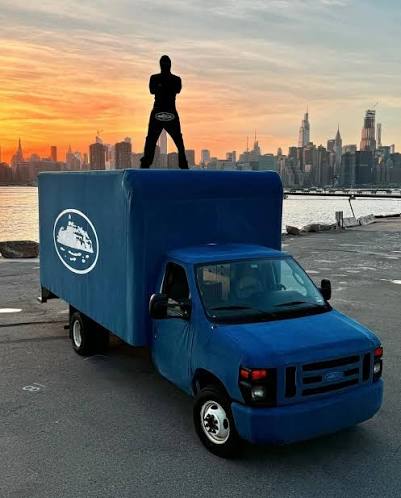
Hundreds of people crossed the city to exchange their jeans from major brands (Carhartt, Supreme, Palace, Amiri) for a Corteiz pair. Staying true to the approach launched in London with the “Great Bolo Exchange” in 2022, the label then donated the 300 collected items to local charities. A model in which mobility serves both commercial buzz and community spirit.
Going out to meet the public: Five Pointed Stars’ mobile dry cleaner
On the sidelines of Men’s Fashion Week in Paris, French collective Five Pointed Stars (FPS) opted for a similar approach to unveil its first creations: a technical K-Way-style shirt and a pair of basketball shorts.
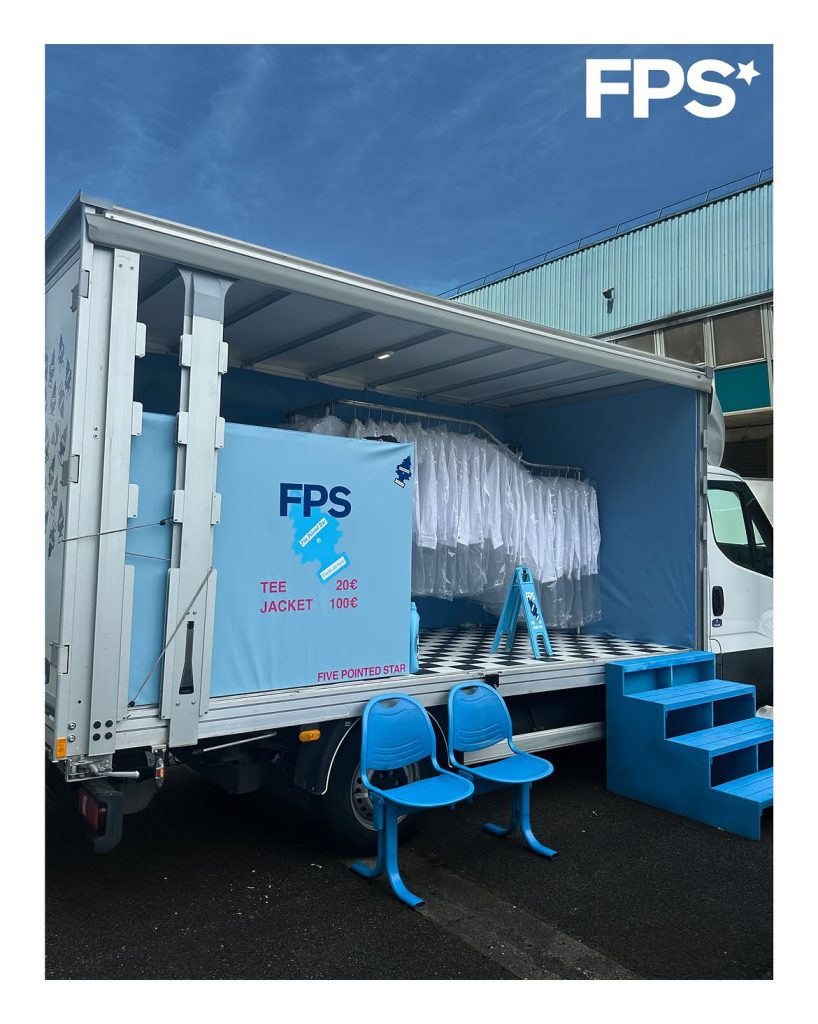

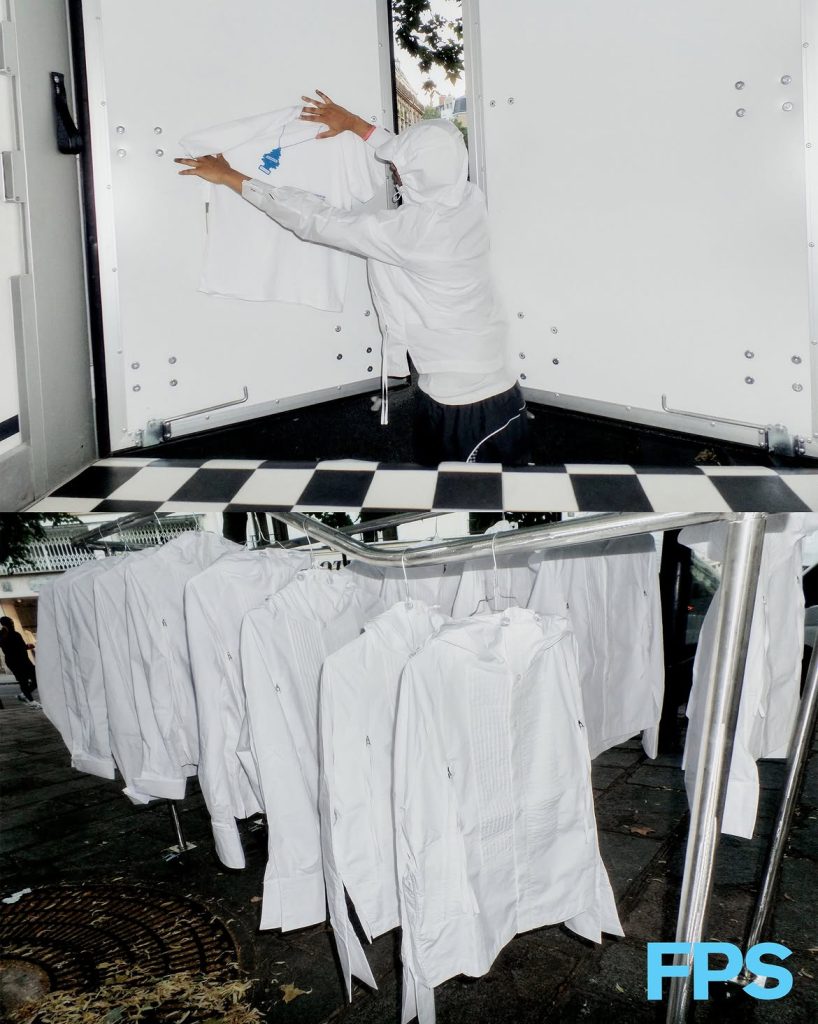
Rather than investing in a traditional pop-up store, the brand opted for a mobile dry cleaner built around the idea of one location per day. The aim is to integrate directly into the urban landscape, intrigue passers-by and break away from the sometimes stuffy setting of traditional stores. By reversing the commercial approach, it is no longer the customer who goes to the brand, but the brand that goes out to find its audience. This makes it possible to reach a much broader audience than the initial circle of enthusiasts who already follow the label on social media. For a young brand that is still relatively unknown, mobility becomes a tailor-made way to build connections without being tied to a fixed location.
Second-hand fashion closer to local communities
Far removed from the constant pursuit of buzz and the immediacy of social media, second-hand businesses were among the first to put their clothing racks on wheels back in the 2010s.
At a regional level, these mobile shops address much broader issues. They create greater accessibility for people who are short on time or live far from major shopping centres, while remaining committed to an eco-conscious approach. They also offer a way to combat social isolation in certain areas by bringing local commerce back into communities. In this context, the truck goes beyond its simple role as a point of sale: it becomes a place for interaction and a genuine moment of connection in everyday life.
Whether it is creating an event around an exclusive drop, bringing a young brand directly onto the streets or making second-hand fashion more accessible outside major cities, the truck is redefining our relationship with shopping. More than just a passing trend, fashion on wheels shows that agility and physical proximity remain powerful ways to bring a community together, far beyond the screen.