
A rapper picking up a paintbrush: should we really be outraged, or see it as a natural evolution? Far from being an isolated phenomenon, it is part of a much broader tradition: from Kurt Cobain in the past to Tyler, The Creator, Justin Bieber and Eminem today, the connections between the music scene and visual arts are growing stronger. A closer look at a fluidity between disciplines that continues to stir debate among critics.
Very recently, Swedish rapper Yung Lean unveiled a brand-new project. To the disappointment of some fans who had been expecting a new album, it was not a record but a body of paintings. Entitled Collected Works, the exhibition brings together ten years of creative work produced under his real name, Jonatan Leandoer Håstad, from 2016 to the present day. Opening on September 25 at a renowned Stockholm gallery, the event made headlines.
Contemporary art: a new playground?
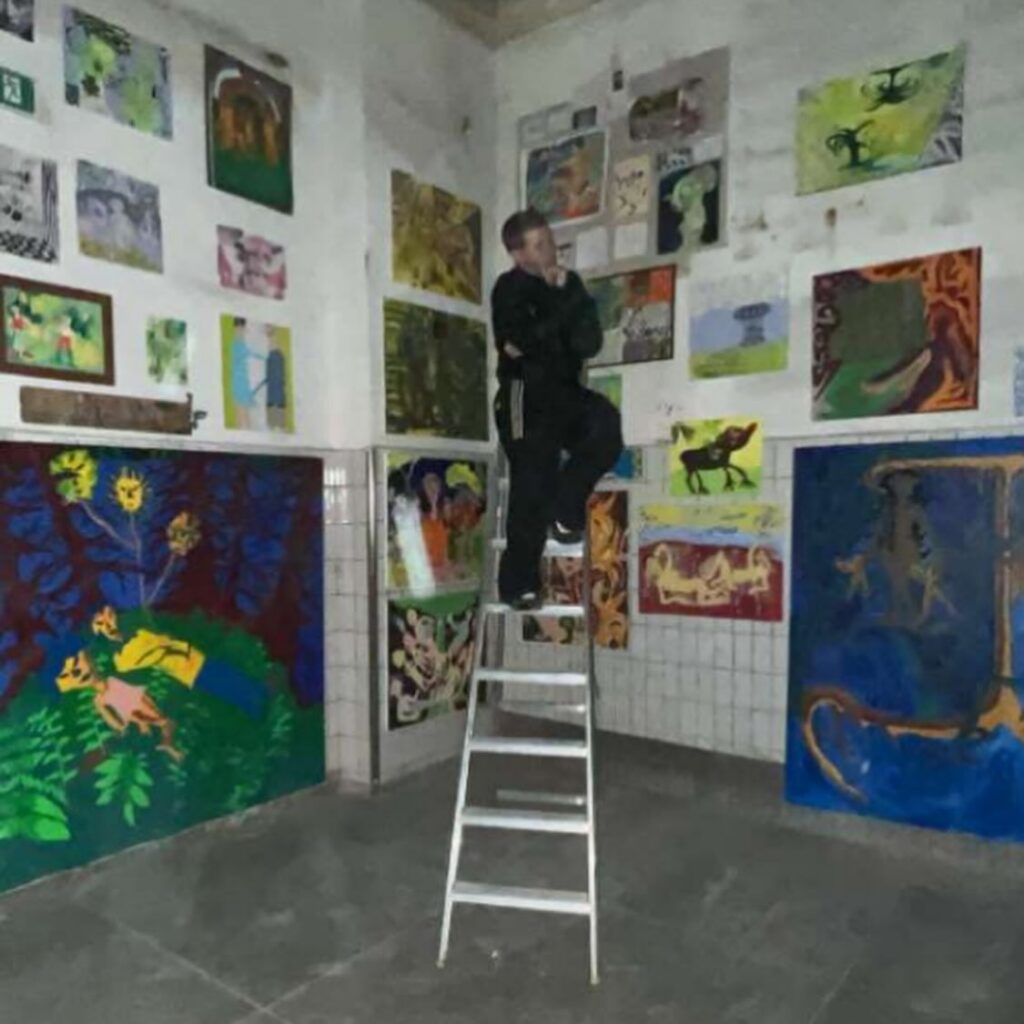
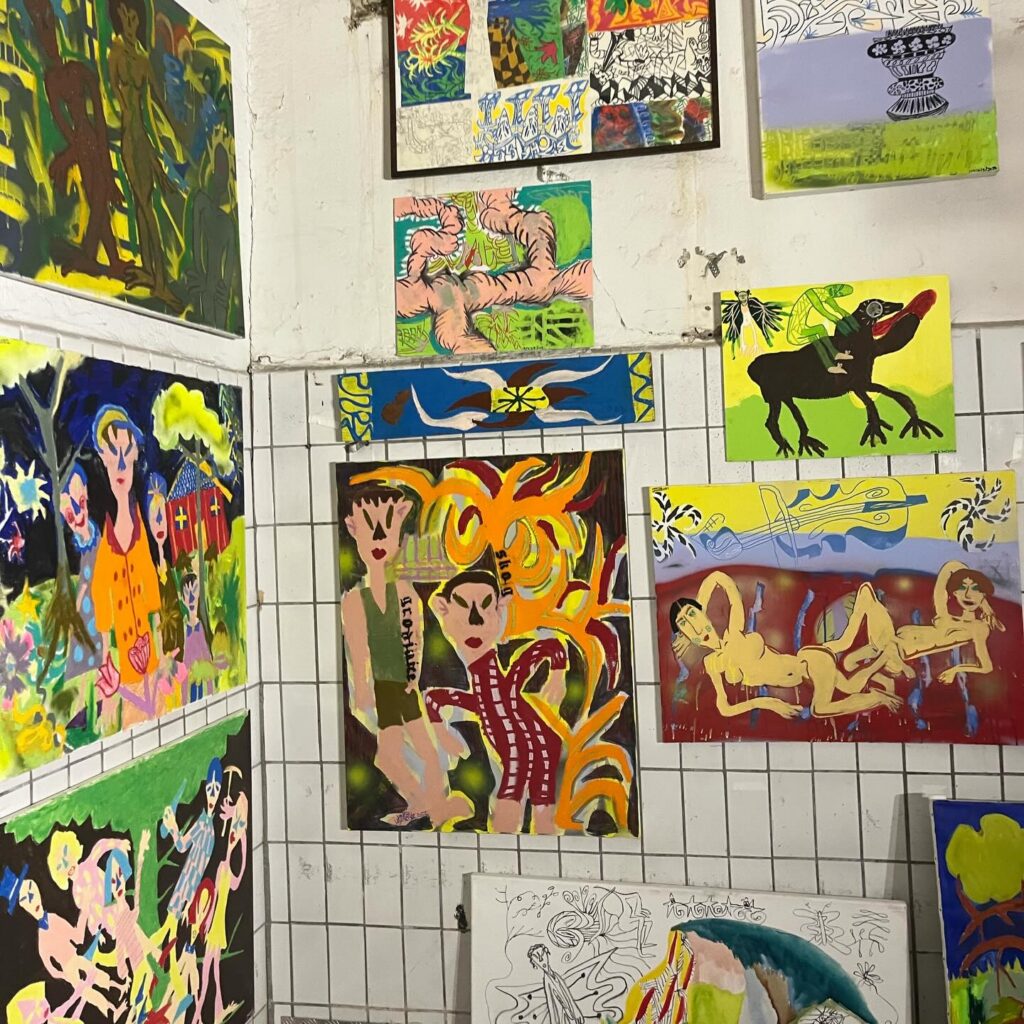
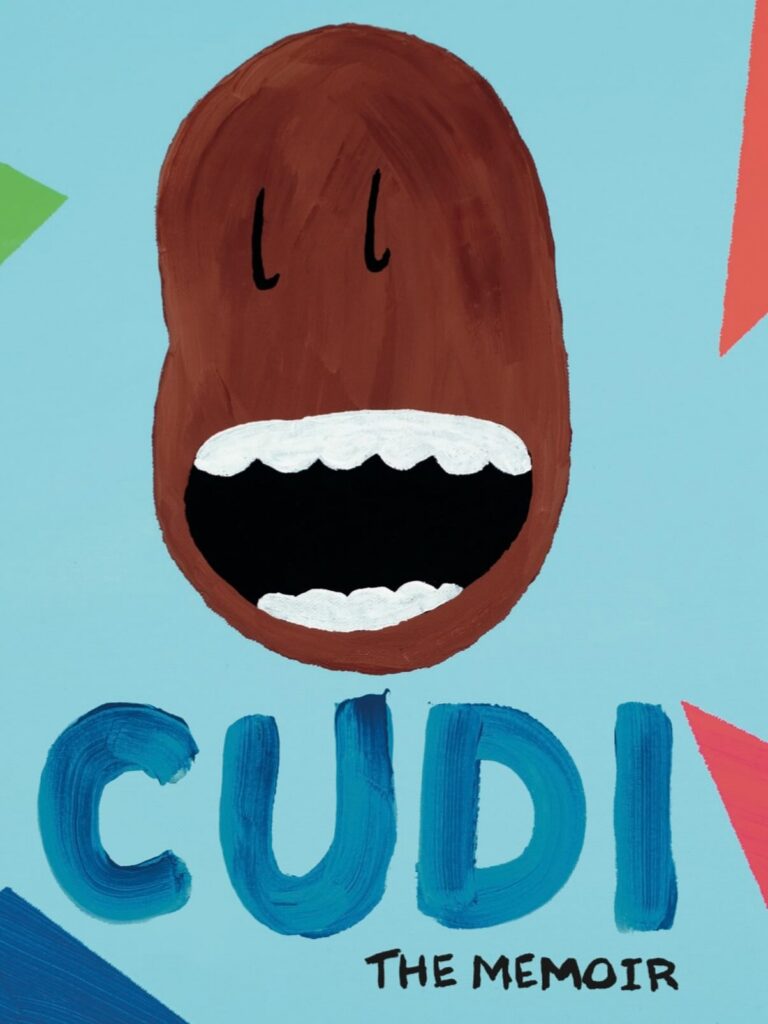
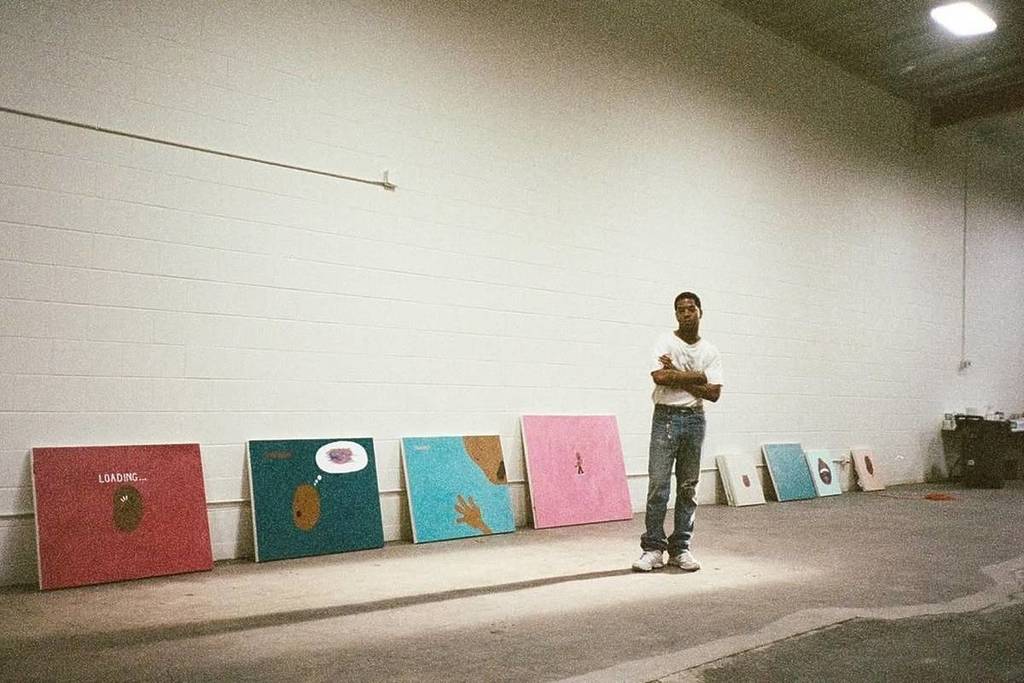
The start of the 2026 season confirms the trend: contemporary art galleries have become the second stage for hip-hop icons. Before Yung Lean in Stockholm, Kid Cudi took over the Ruttkowski gallery in the heart of Paris’s Marais district earlier this year with his exhibition Echoes of the Past. On its website, the gallery highlighted the project’s aesthetic continuity: “In his expanded artistic practice, he plays with the same juxtapositions of melancholy and happiness that define his musical style. If they are not self-portraits, his paintings suggest the search for an emancipated self.” An obvious bridge between visual art and music, reinforced by a bespoke soundscape at the opening.
In France, the approach is also becoming institutionalised. Rapper Olivio Ordoñez (Oli, from the duo Bigflo & Oli) took over the Les Abattoirs museum in his hometown of Toulouse for several months. Combining his own installations with those of creators he admires, the artist reinterpreted around fifty works from the institution’s collection, bringing together figures as varied as Andy Warhol, Keith Haring, Pierre Soulages and JR.
Hip-hop and visual arts
While the younger generation moves freely and unapologetically between different media, hip-hop has always maintained an obvious connection with the visual arts, from its roots in graffiti to its adoption of fine art codes.
Long before embarking on a career as a rapper and becoming a giant of the music industry, a young Eminem first imagined himself as a comic-book artist, immersed in the Marvel universe before discovering rap at the age of 14. The king of New York, JAY-Z, staged his Picasso Baby performance at New York’s Pace Gallery in 2013. During a six-hour conceptual marathon in front of an audience of leading figures from artist Marina Abramović to Pablo Picasso’s granddaughter, the rapper repeated the lyrics of his track in an attempt to elevate his album to the status of a masterpiece.
Sometimes scathing criticism
Why does the transition from recording studio to painting studio still cause so much friction? Who decided that an artist should express themselves through only one discipline? Musical success often becomes a form of confinement: known for their impact on music, these artists frequently find their legitimacy in the visual arts called into question. Online and in the traditional press alike, criticism pours in as soon as a musician crosses the threshold of a gallery.
Among the mainstream press, scepticism towards these attempts remains prevalent. In 2013, at the time of JAY-Z’s performance, Le Figaro did not mince its words, pointing out that at Pace Gallery, the rapper appeared to be trying to elevate an album to the status of a masterpiece, concluding that it was difficult not to see it as yet another exercise in “self-congratulation” by American rappers.
Among the public and art enthusiasts, it is instead the privilege of fame that fuels the debate. Beneath Kid Cudi’s post announcing his Paris exhibition, scathing comments summed up the unease. Some described the paintings as the work of a primary school pupil, while others lamented the fact that so many incredibly talented artists work hard their entire lives without ever receiving such recognition. Others, meanwhile, joked about organising a fight in the ring between Kid Cudi and actor Adrien Brody who has also turned to painting with the winner earning the right to be allowed to paint.
Are we judging the true value of a painting, or the fame of the person holding the brush? While immediate access to prestigious galleries is clearly a form of celebrity privilege, denying an artist the right to change medium reflects a form of outdated conservatism. Art history has always been shaped by connections between disciplines and multidisciplinarity. Whether their work stands the test of time or remains a mere footnote in their careers, these ventures at least have the merit of shaking up an art world that can sometimes be too insular.