
Forget all-night gigs and smoke-filled recording studios. Today, rap’s biggest names are trading street cred for healthy credibility, with running shoes on their feet and stopwatches in hand. A closer look at a phenomenon where the streets have become a new playground for artists and their communities.
Running as a way to bring communities together
In October, Gradur sold out his very first Bercy, an iconic venue for the artist behind the famous track “On est pas tout seul”. On the eve of the first day of nationwide mobilisation on October 17, which he also took part in, the rapper stood out with an unprecedented strategy. Throughout the summer, he was extremely active on his social media platforms. Yet this had nothing to do with traditional promotion or new music releases. Instead, his constant online presence revolved around sport, and more specifically, running.
The artist who once described himself as more of a “push-ups and pull-ups” kind of guy in one of his tracks began documenting his progress in a discipline that has become incredibly trendy in recent years. Running clubs are now popping up in cities everywhere, while major sportswear brands such as New Balance, Salomon and Nike have launched their own running collectives. It’s the perfect way to bring enthusiasts together while cultivating an approachable image.
Named the “Sheguey Running Club”, in reference to the nickname the artist gives his community, Gradur’s project kicked off with an inaugural gathering with his fans in Montpellier on August 9. The movement was underway. The Sheguey Running Club then met again on Sunday, September 20, 2026, for a 5 km run in the Bois de Vincennes. Nearly 600 runners answered the call, hitting the pavement alongside him.
A second edition took place in the Bois de Vincennes three weeks later. This time, participation was capped at 200 runners for safety reasons. The Chalet du Lac and its spacious terrace were even booked exclusively for the occasion, complete with a food truck, a DJ, various activities and personalised water bottles featuring the star of the day. It was a winning way for the rapper to forge genuine connections with his fans. To make the occasion even more memorable, the bucket-hat-wearing artist had arranged exclusive “On est pas tout seul” merchandise, alongside his longtime friend Naza, who was also there to support the initiative.
The rise of healthy credibility?
In a moving Instagram post dated September 12, Gradur revealed that he hadn’t touched a drop of alcohol in four years and had replaced his former addictive behaviours with sport, particularly running. “Stay strong, everyone fighting their demons every day to become a better version of themselves,” the artist wrote on Instagram.
Speaking to RMC Sport, he also explained how the adventure began: “It’s a running club, but a special one that will travel to several cities across France, maybe even Africa and other places around the world. The aim is to get moving and have fun. It’s a great experience for people. It all started because I needed to lose weight to put on a good show at Bercy on October 16. I hadn’t exercised regularly for almost ten years. So I told myself that if this wasn’t enough motivation to get back into it, I never would. It was really hard at first. I started with incline walking and gradually worked my way up, step by step, until I was running. It took me two months to get back into it.”
Across the Atlantic, American rapper Wiz Khalifa, originally known for his heavy use of recreational drugs, has undergone a similar transformation. Today, he posts his daily routine, combining yoga sessions with running. He too has organised several group runs with his fans, notably through the streets of New York. The rapper has traded 12-hour studio sessions under the influence for long-distance runs, even becoming the face of Spotify’s Running Mode.
As Wiz Khalifa explained in an interview with Hypebeast, he used to spend between six and twelve hours smoking in the studio, which slowed down the tempo of his music. Today, he works out throughout the day and records with a clear mind, producing tracks that reflect his current lifestyle rather than hazy late-night sessions at 3 a.m.
A global trend
One of the true pioneers of this new lifestyle is rapper Gunna. The artist says that refocusing on health and fitness has quite literally changed his life.
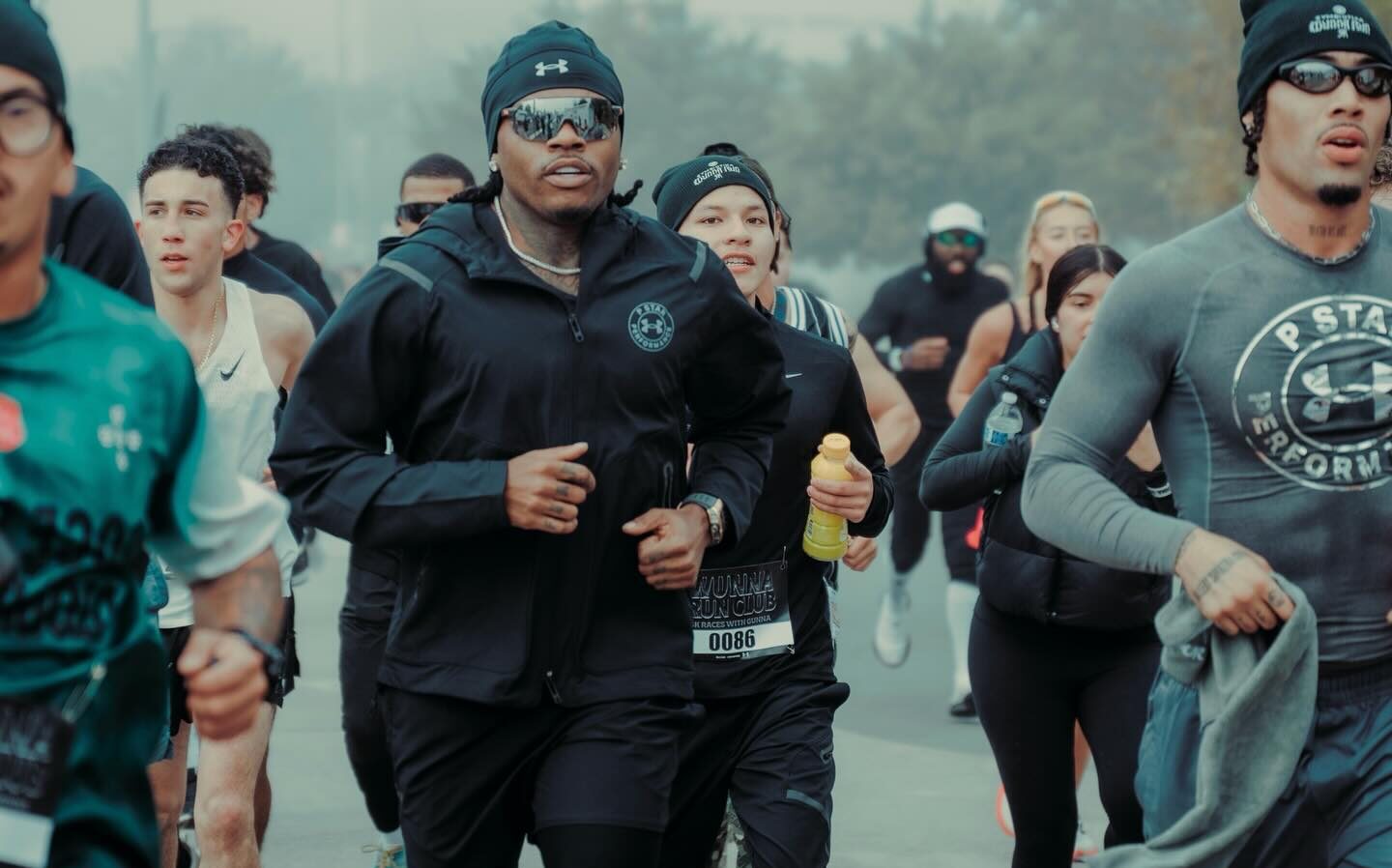
He organised his first-ever “Wunna Run 5K Club” event in Prospect Park, Brooklyn, in September 2025. In the months that followed, he took the concept around the world, leading running sessions in Toronto, Washington, Miami, Atlanta, London, Johannesburg, Houston and Los Angeles, attracting thousands of fans at every stop. A large majority of participants at these gatherings came from the Black community, reflecting a genuine cultural shift within the hip-hop movement.
British rapper Central Cee is also embracing the trend, running on a very regular basis. Beyond physical exercise, running has become a powerful way to communicate, connect with his audience and build a sense of community, while reinforcing his street credibility by associating it with healthier habits.
Another striking parallel with Gradur’s approach was his much-talked-about appearance at the street workout area in Bercy just before his own concert. The spot, which went viral on social media, not only showcased his flair for performance, with physical warm-ups now becoming an integral part of the show, but also demonstrated the artist’s genuine interest in French sporting culture. By swapping excess for the discipline of running, these artists are no longer simply setting musical trends: they’re now encouraging their audiences to embrace a healthier, more connected lifestyle.