
The ballet of fashion capitals has officially resumed. From February to March, the Big Four follow one another with back-to-back shows, already shaping the narrative of next winter’s silhouettes. While Paris is set to unveil its womenswear collections from 3 March, a stop in London is essential before diving into the blue-white-red effervescence. Beyond the looks spotted in recent weeks, it is an entire creative ecosystem that deserves attention. The British capital periodically declared weakened proves it hasn’t said its last word.
A New Guard Making Waves
Some claim it’s losing momentum. London is often portrayed as economically vulnerable, especially in the wake of Brexit, overshadowed by the powerhouse fashion capitals of Milan and Paris. And yet, both on the catwalk and in the intimate salons where collections quietly reveal themselves, a different pulse is emerging. It’s driven by a generation that isn’t waiting for permission to take its place.
The list of names reshaping the landscape grows longer season after season: Conner Ives; Simone Rocha, already firmly established, yet unveiling her first collaboration with adidas this season; the duo Chopova Lowena; Lucila Safdie; and Jawara Alleyne.
The latter, whose creations are already worn by Tyla and Rihanna, opted this season for the closeness of a presentation, almost conceived as an exhibition. An intimate format that highlights the designer’s deep interest not only in the garment itself, but in the material.
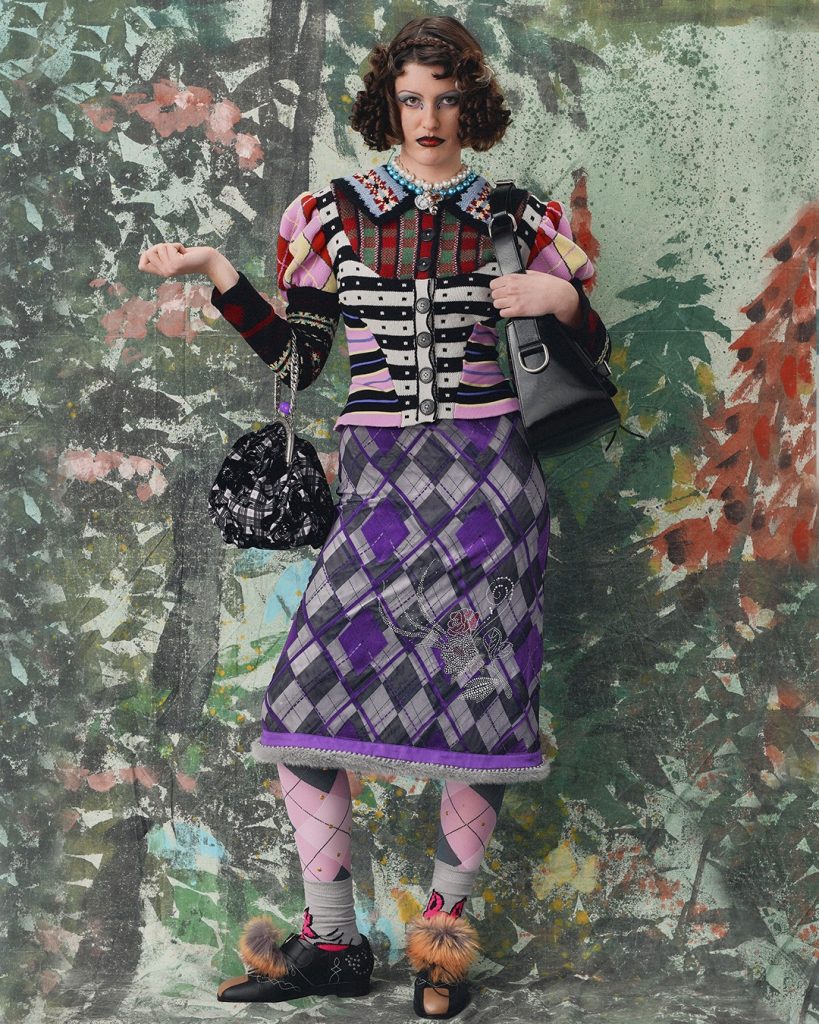
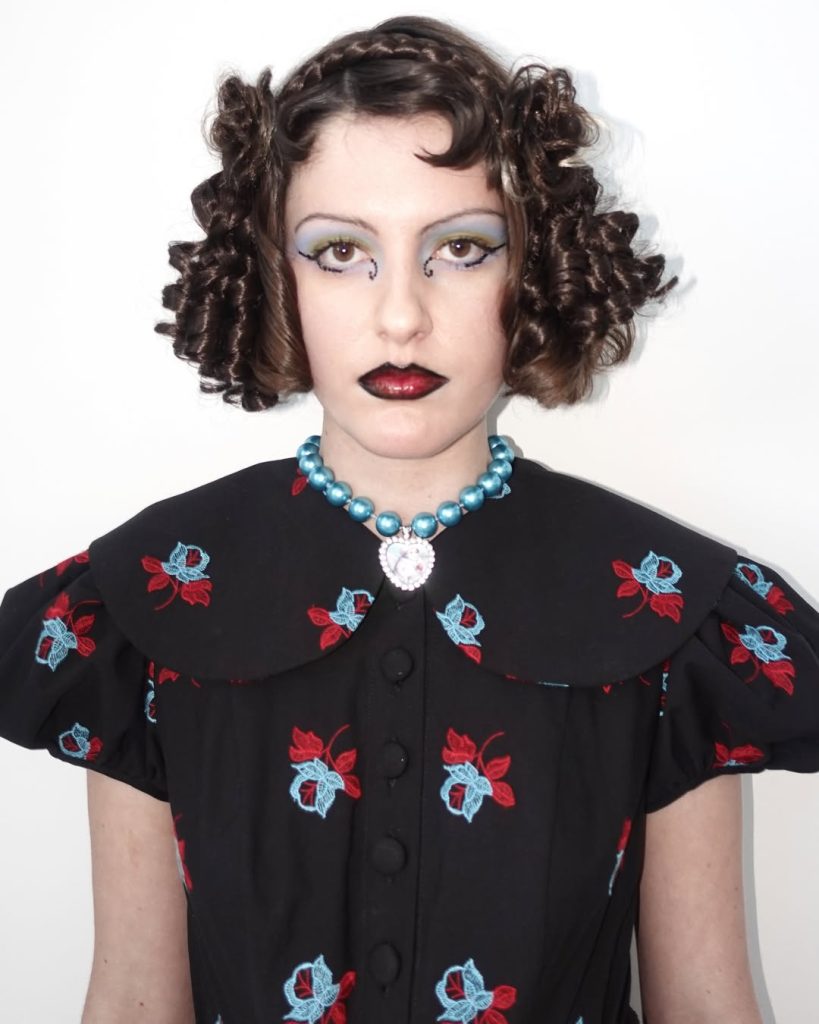
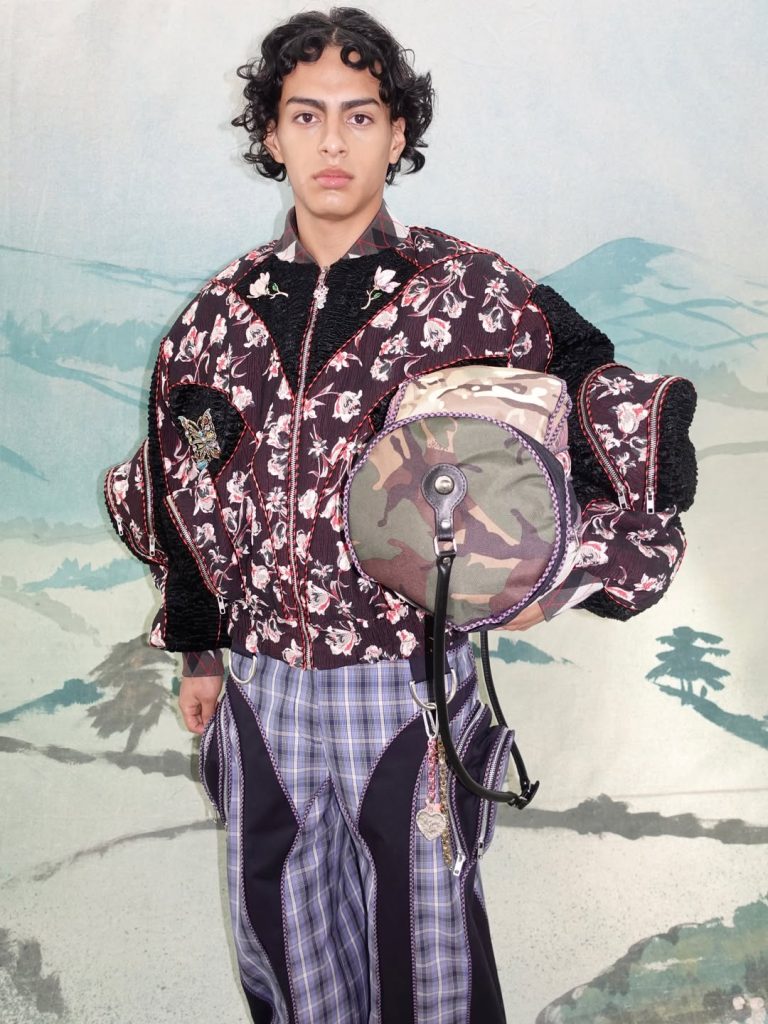
At Chopova Lowena, the pleasure lies in the collision of references, think Regency-inflected romance meeting the crisp precision of a perfectly kept golf course at dawn. The label’s emblematic pleated skirts remain central, but beyond the surface charm is a practice rooted in circularity. Garments from past collections are reworked and reimagined, making sustainability not just a statement, but the foundation of the aesthetic itself.
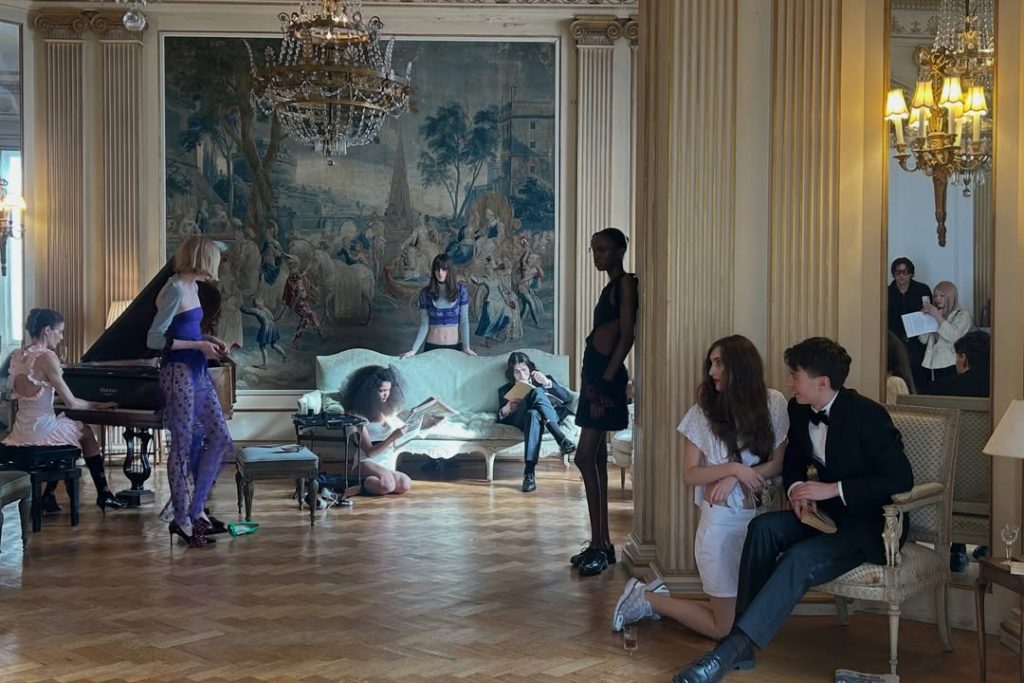
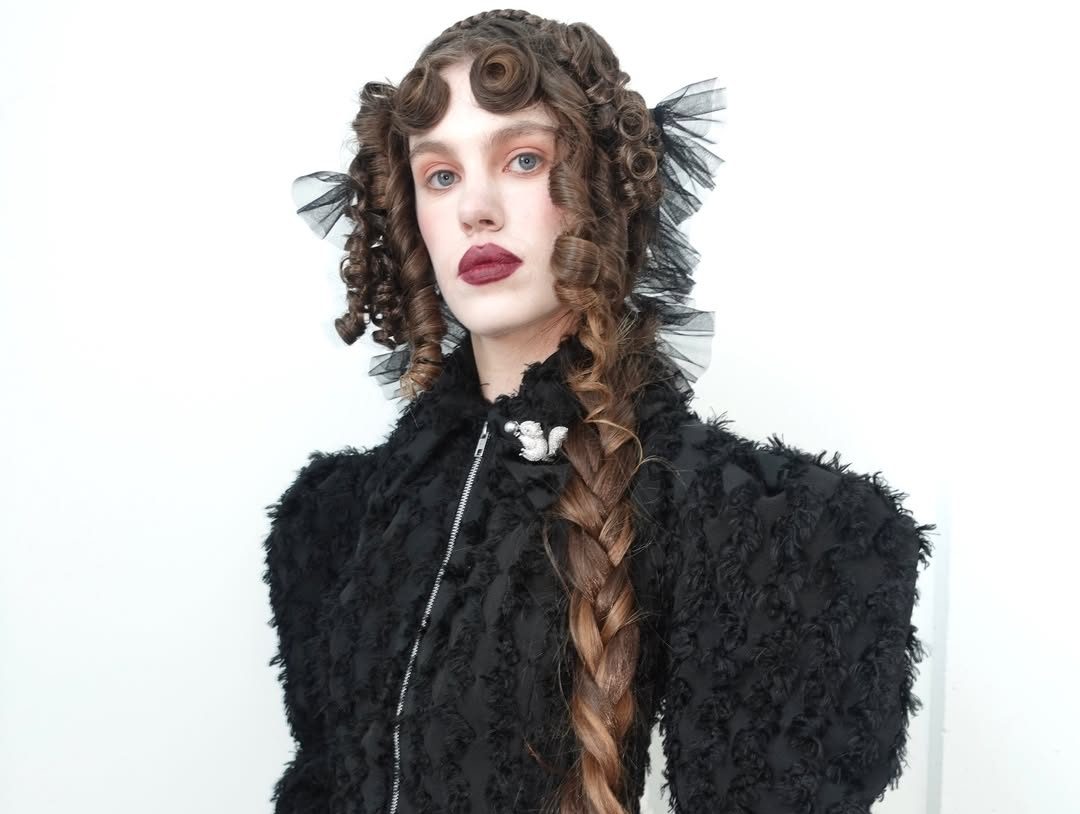
Lucila Safdie, for her part, builds around the idea of community. The Argentine designer conceives her collection alongside those close to her, blurring the line between the intimate circle and the public sphere. In a refined salon with eighteenth-century accents, the square necklines of demure dresses meet more contemporary sheerness. A successful tension that firmly places the designer at the forefront of the London fashion scene.
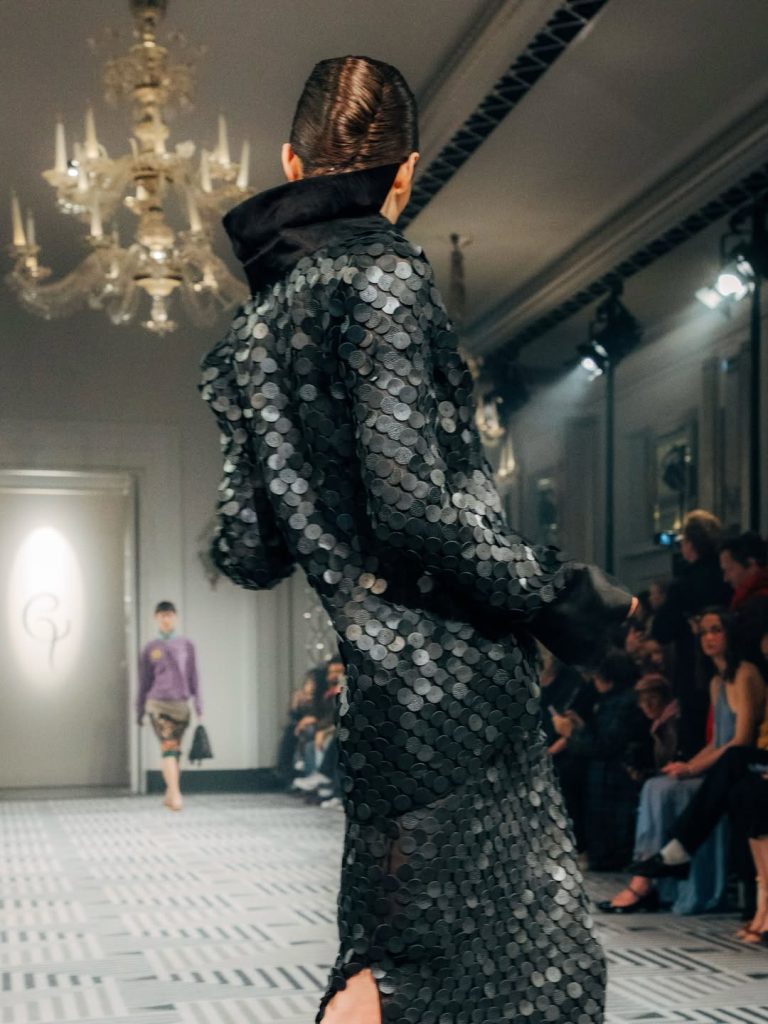
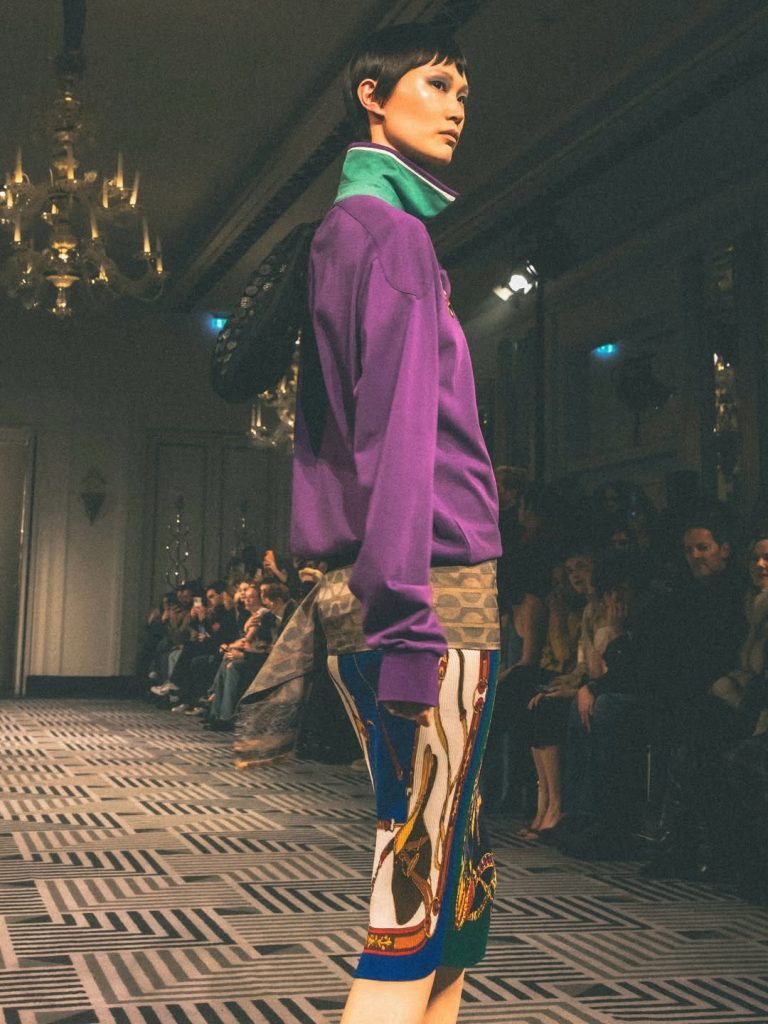
As for Conner Ives, the American designer based in London, he opened his show with Tish Weinstock. The casting was deliberately diverse, with each model radiating a distinct presence, as if existing entirely on their own terms. The collection carried us back a century, to a Germany amid profound transformation. Beneath the surface ran a subtle parallel with today’s United States, the country the designer calls home. It felt both like a quiet critique and a way of harnessing the charged spirit of a pivotal era, opulent yet uneasy, suspended between worlds.
In his own words: “Glamour to subdue the dread”, elevating beauty to keep anxiety away. What lingered were the scarves knotted low on the hips, the smooth lines of the silhouettes, that carefully calibrated nonchalance, and the floral and bird embroideries that seemed to make time stand still.
Awarded the BFC/Vogue Designer Fashion Fund in 2025, Ives also points to a more structural reality: resources matter. Winning this prize means being able to strengthen his team, solidify the brand’s foundations, and think beyond the next season. In London, perhaps more than anywhere else, funding remains a critical issue for emerging labels. Talent alone is not enough; it takes an ecosystem capable of sustaining it.
London, the matrix of creation?
What perhaps sets London apart is less its commercial power than its ability to bring new talent to the surface. Each season, the final collections of students from Central Saint Martins draw attention far beyond the United Kingdom. The graduate show acts as a barometer: it reveals radical silhouettes, textile experimentation, and deeply personal narratives that foreshadow tomorrow’s debates.
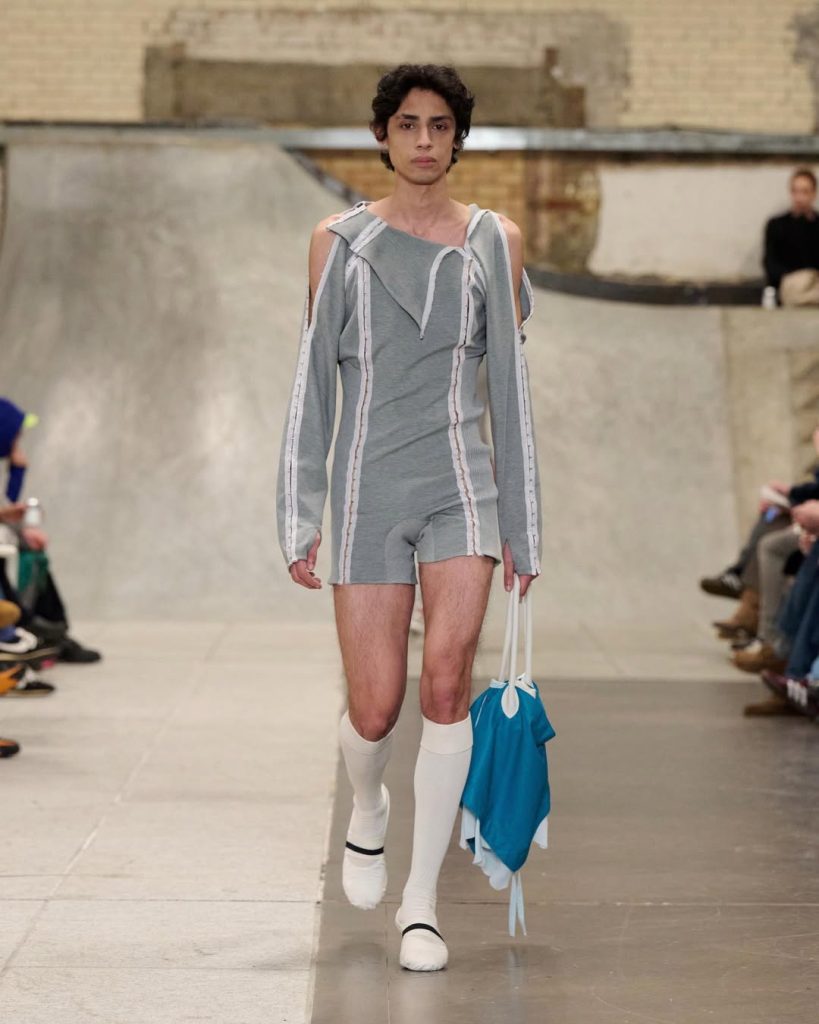
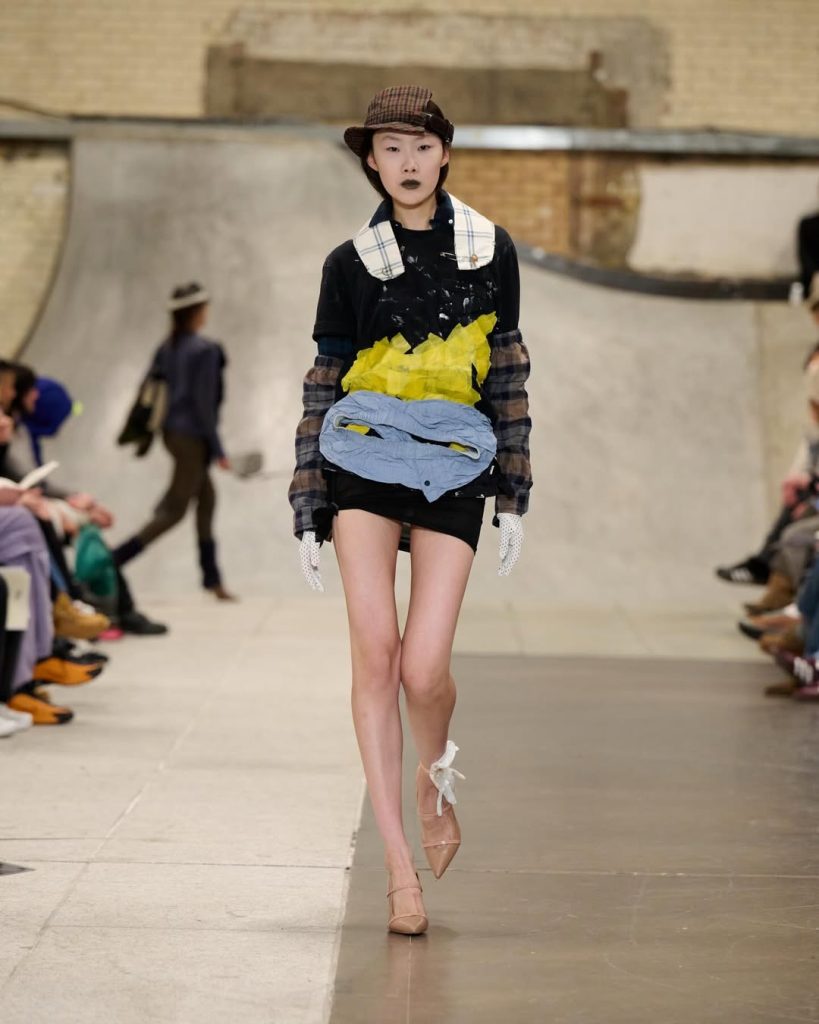
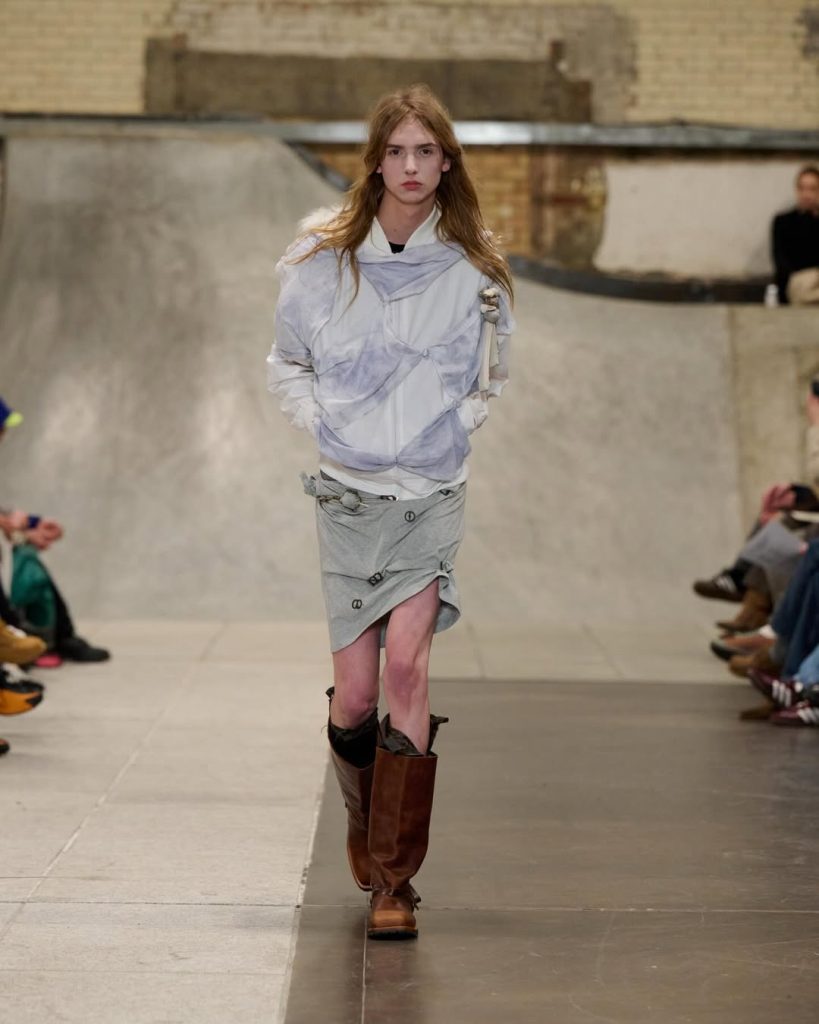
Alongside them, the incubator Fashion East, founded by Lulu Kennedy, supports young designers over the course of three seasons. This season, Jacek Gleba, Mayhew and Nuba are benefiting from this platform. More than just a springboard, Fashion East operates as a mentoring structure, but also as a creative agency, facilitating collaborations with established brands.
This support has produced names that have since become essential: Jonathan Anderson, Grace Wales Bonner, Kim Jones and Martine Rose. Since 2000, Lulu Kennedy has acted as a guiding figure, ensuring that London’s creativity is not swallowed up by market constraints.
London Fashion Week does not necessarily seek to compete in terms of scale or numbers. It cultivates something else: a taste for experimentation, a tolerance for imperfection, and an ability to make heritage and rupture coexist. The fashion scene has its challenges, but the British capital still feels like a creative laboratory. As long as young designers can experiment, question the rules, and put forward new ideas, London will remain very much alive.